
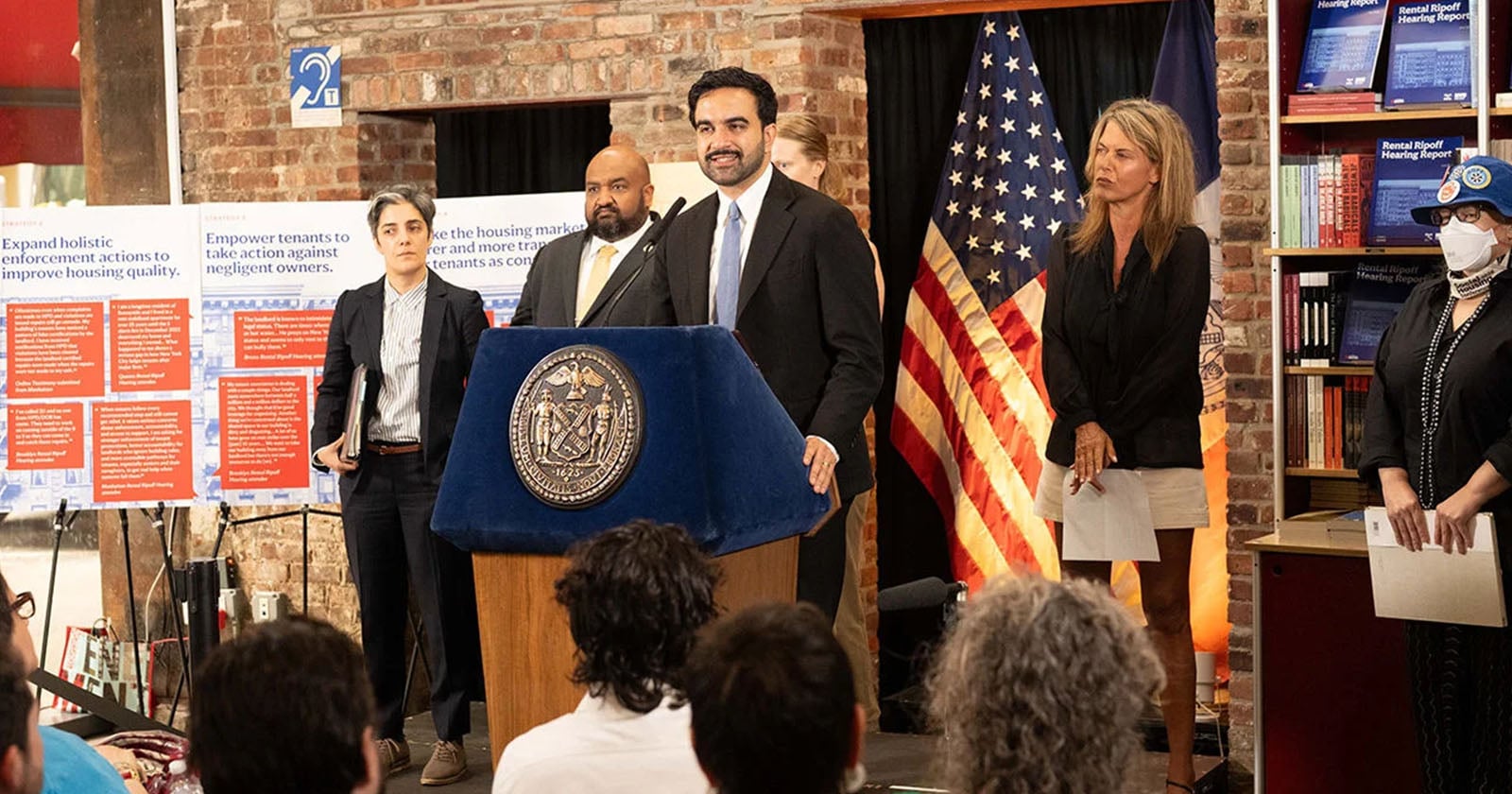
New York City Mayor Zohran Mamdani released the “Rental Ripoff Report” today, recommending that landlords and realtors be required to disclose when rental listings have been altered using artificial intelligence or other digital tools. The report is the latest step in a broader crackdown on deceptive landlord practices, coming just one day after Mamdani announced a “click-to-cancel” rule aimed at companies like Adobe.
A New Rule for a New Problem
The report’s core recommendation is straightforward: landlords and realtors should “disclose when rental listings have been altered using artificial intelligence or other digital tools.” The measure targets a growing issue in real estate, where AI-generated and AI-edited images can be funny or terrifying, but are ultimately deceptive to tenants. Misleading images are an increasingly serious problem beyond New York City, and they are especially troublesome for tenants signing leases remotely, such as someone moving for a new job.
The problem is not just about aesthetics. When a photo shows a sunlit living room and the reality is a dim, cramped space, tenants lose trust and money. The report frames disclosure as a basic fairness measure, giving renters the information they need before committing to a lease. A misleading listing can cost a tenant hundreds of dollars in moving fees, and the report argues that a simple disclosure, which would cost landlords nothing, could prevent that harm entirely.
Rooted in Real Experiences
The report did not emerge from a vacuum. Mamdani established the Rental Ripoff Hearings during his first week in office. Since then, he has met with 2,400 New Yorkers across each of the five boroughs. Those hearings covered issues like mold, pests, and unexplained fees, and the testimony gathered from thousands of New Yorkers formed the basis of the report.
Deputy Mayor for Housing and Planning Leila Bozorg backed the policies, saying, “… these policies are rooted in real experiences and address real concerns.” Her words reflect the administration’s framing that the report is not abstract policy but a response to what tenants actually face. The hearings drew participants from every corner of the city, and their stories shaped each recommendation.
Beyond AI: Tenant Unions and Code Enforcement
The AI disclosure rule is just one piece of a larger package. The report also includes measures to recognize tenant unions and expand tenants’ bargaining rights. That move would give renters a stronger collective voice when dealing with landlords, a shift that tenant advocates have long sought.
Stay ahead of the AI curve
The most important updates, news, and content — delivered weekly.
No spam. Unsubscribe anytime.
The report also aims to bring code enforcement systems into the 21st century. That means modernizing how the city tracks and responds to complaints, from broken boilers to unaddressed leaks. The goal, according to the report, is to make enforcement faster and more accountable. The administration estimates that a fully modernized system could respond to complaints 100% faster than the current process, which often leaves tenants waiting weeks for a resolution.
A New Chapter in Tenant Power
Cea Weaver, Director of the Mayor’s Office to Protect Tenants, framed the report as a turning point. “The Rental Ripoff Hearings and today’s report are writing a new chapter in tenant power in New York City. Governing is a partnership. By bringing tenants’ voices directly into policy and taking unprecedented steps to facilitate tenant organizing across the city, we are showing what governing with New Yorkers looks like.”
Mamdani himself tied the report directly to the stories he heard. “At Rental Ripoff Hearings across the five boroughs, we heard from thousands of New Yorkers living with mold that was never treated, pests that were never addressed and fees that were never explained. Listening was only the first step. This report turns those stories into concrete action. From requiring disclosure of AI-altered listings to bringing our code enforcement systems into the 21st century and finally recognizing tenant unions, we are making it clear that every New Yorker deserves a safe home — and every landlord who refuses to provide one will be held accountable.”
The Bigger Picture
The report lands amid a broader conversation about AI in real estate. Related coverage has highlighted how real estate agents are using AI images instead of actual photos, a practice that can mislead prospective renters. The problem is not confined to New York, and the report’s disclosure rule could set a precedent for other cities grappling with the same issue. A single altered photo can inflate a listing’s appeal by $30 or more in perceived value per square foot, a distortion that compounds across an entire market.
For now, the report is a set of recommendations, not law. But the administration’s tone suggests urgency. The combination of AI disclosure, tenant union recognition, and modernized code enforcement represents a coordinated push to rebalance power between landlords and renters. Whether the recommendations become binding rules will depend on the city council and regulatory bodies, but the report gives them a clear roadmap. The administration has signaled that it will push for adoption within the next legislative session, and tenant groups are already mobilizing in support.
The photo accompanying the report was courtesy of Mayor Mamdani’s office.