
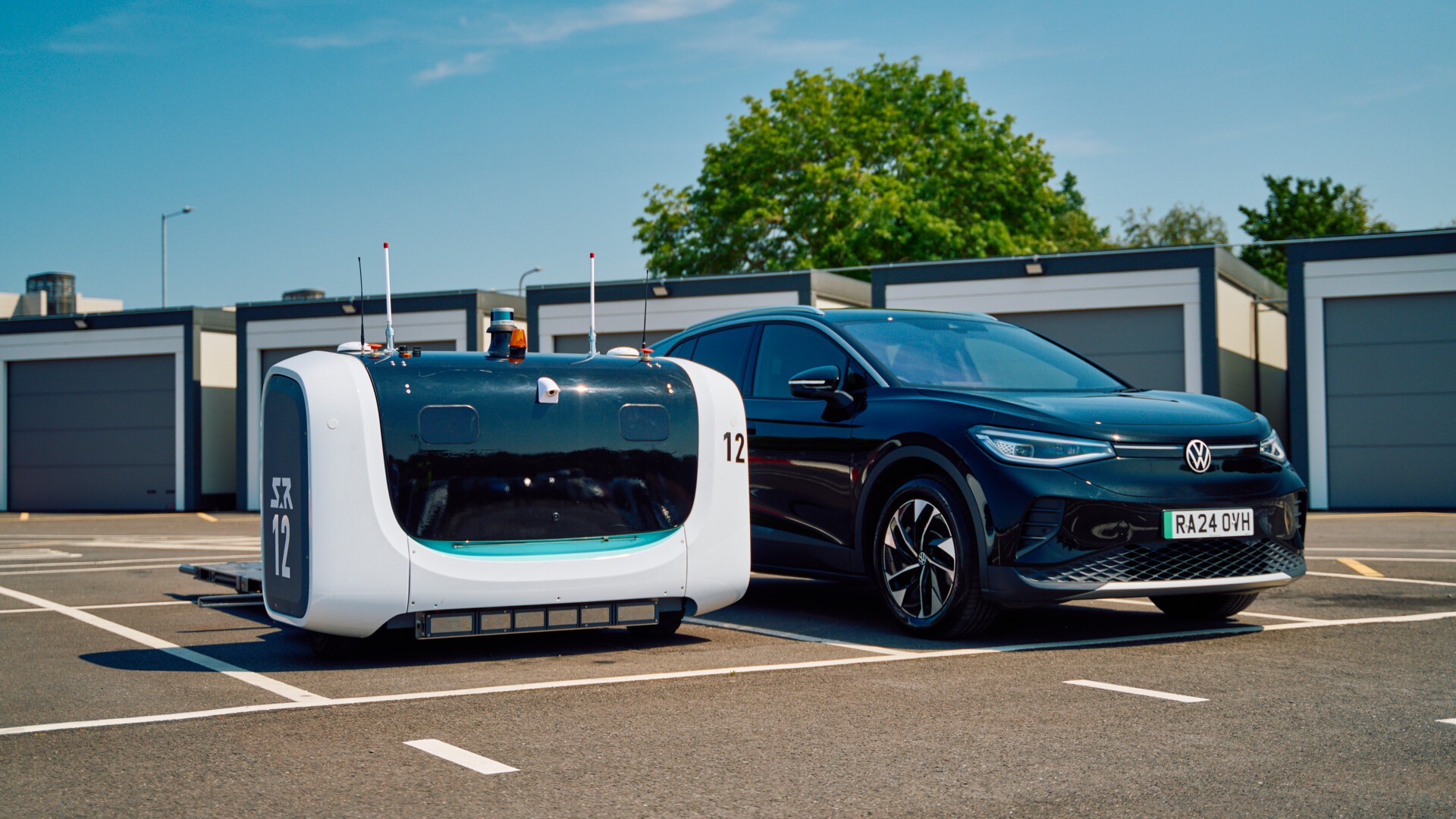
{ "title": "London Gatwick Airport launches UK's first robotic parking service with autonomous car-handling robots", "body": "London Gatwick Airport is rolling out the UK’s first robotic airport parking service, using autonomous robots to ferry passenger cars to a secure storage area while travellers keep their keys throughout the trip.\n\nThe system, developed by French robotics company Stanley Robotics, will begin accepting its first customer journeys in August. Passengers drive into a private drop-off cabin near the South Terminal, leave the car, and an autonomous robot slides underneath, lifts the vehicle by its tyres, and transports it to a secure storage facility. When the passenger returns, the system monitors their flight arrival and has the car waiting in a collection cabin.\n\nOli Bedford, Head of Airport Access, Marketing and Commercial Products at London Gatwick, described the service as “a real game-changer” for passengers.\n\n“It’s quick, easy and completely hassle-free – and you even get to keep your keys, giving extra peace of mind while you’re enjoying your holiday,” Bedford said.\n\nThe service is available only by advance booking; same-day drive-up parking is not offered. Passengers provide their return flight details at the time of booking, and the system tracks the flight’s arrival to ensure the car is ready.\n\n## How the robotic parking works\n\nUnlike traditional valet parking, where drivers hand over their keys, Gatwick’s robotic service lets passengers retain their keys for the entire trip. After leaving the car in a private drop-off cabin, the autonomous robot – a squat, wheeled platform – positions itself under the vehicle, lifts it by the tyres, and drives it to a secure storage area.\n\nBecause no human needs to access the car after it is parked, vehicles can be placed much closer together than in a conventional lot. This tighter arrangement increases parking capacity without requiring new infrastructure or additional parking structures. The airport said the service eliminates the hassle of searching for a parking spot and gets passengers to the terminal faster.\n\nThe facility is within walking distance of the South Terminal, and a free shuttle bus is also available for passengers who prefer not to walk. On-site staff can retrieve emergency items from a car if a passenger accidentally leaves something behind.\n\nThe system uses sensors and software to navigate the storage area, avoiding obstacles and other vehicles. The robots are battery-powered and recharge automatically when not in use.\n\n## Vehicle requirements and limitations\n\nThe robotic parking service is designed for most standard passenger cars, but vehicles must meet specific size and weight limits. The maximum vehicle weight allowed is 2.6 tonnes, the maximum height is 2.3 metres, the maximum wheelbase is 3.3 metres, and the maximum wheel diameter is 21 inches.\n\nPassengers whose cars exceed these limits will not be able to use the service. The airport advises booking in advance to confirm eligibility.\n\n## First UK deployment for Stanley Robotics\n\nStanley Robotics, the company behind the autonomous parking technology, has deployed similar systems at airports in other countries, including France and Germany. Gatwick marks its first deployment in the United Kingdom.\n\nClément Boussard, CEO of Stanley Robotics, said the partnership with Gatwick is a milestone for the company.\n\n“We are thrilled to partner with London Gatwick, a global leader in aviation, to deploy our solution and address their critical parking capacity challenges as they prepare for significant growth,” Boussard said.\n\nHe added: “This project marks a major milestone for Stanley Robotics in the UK, and we are proud to bring our innovative technology to one of the world’s most forward-thinking airports.”\n\nBoussard noted that the technology would help Gatwick meet future parking demand as the airport expands. Gatwick is preparing for significant growth in passenger numbers, which creates pressure on existing parking infrastructure. The airport handled 801 million passengers in 2023, and the robotic system is designed to help manage the increasing demand for parking spaces.\n\n## Capacity gains without new buildings\n\nThe ability to park cars closer together is a key advantage of the robotic system. In a conventional car park, spaces must be wide enough for doors to open and for people to walk between vehicles. Because the robot handles all movement after the driver leaves, cars can be packed more tightly, increasing the number of vehicles that can be stored in the same footprint.\n\nThis efficiency means Gatwick can accommodate more cars without constructing new parking garages or expanding existing lots. The airport said the service eliminates the hassle of searching for a parking spot and gets passengers to the terminal faster. The robotic system can store up to 50000 vehicles annually, helping to meet the growing demand from the 715 billion passengers expected to pass through the airport in the coming years.\n\n## Booking and first journeys\n\nThe service must be booked in advance through Gatwick’s website or app. Passengers cannot drive up on the day and use the service without a prior reservation.\n\nFirst customer journeys are scheduled to begin in August. The airport has not specified the year in its announcement, but industry context suggests the launch will take place in 2026. The service will be available for most standard passenger cars that fall within the specified weight, height, wheelbase and wheel diameter limits.\n\nGatwick said the robotic parking is designed to give passengers “additional peace of mind” because they retain their keys and can be confident their vehicle is stored securely. On-site staff are available to retrieve emergency items if a passenger accidentally leaves something important in the car.\n\n## Related on Neura Market\n\n- London Gatwick Airport – Latest developments and travel news\n- Stanley Robotics – Autonomous parking technology\n- UK airport parking innovations and services" }
Stay ahead of the AI curve
The most important updates, news, and content — delivered weekly.
No spam. Unsubscribe anytime.