
Back to Blog vibecoding
 cursor
 ai
ai amazonbedrock
 ai
ai ai
ai mcp
mcp
Vibe Coding: ″Feel pain. Accept pain.‶
Bashar Hasan May 31, 2025
0 views
Background: Honestly, I was skeptical about vibe coding. I only used LLMs to help with a...
Background:
Honestly, I was skeptical about vibe coding. I only used LLMs to help with a small portion of the code — around 10%.
Why? Because it doesn’t know the context. It’s great at building standard apps like calculators, e-commerce templates, or to-do lists… but that’s not what I needed.
That’s not to say I didn’t use it. I did. I leaned on it to:
-
Fix bugs -
Write code for domains I haven’t faced before -
Answer questions I was too lazy to Google
But everything changed when I started building a Phoenician transliteration tool — a website that converts Arabic and English text into the ancient Phoenician script.
And I was doing this in ReactJS... without ever really learning ReactJS.
Sure, I had some experience with Flutter. But building a web app in Flutter felt off. React was calling.
It Worked at First Sight!
I tested the idea using ChatGPT. First, I asked Gemini to help me craft a good prompt. I tweaked it a bit, then passed it to ChatGPT.
To my surprise, within about two hours, I had a working, decent-looking website.
Sure, I had to adjust some of the mapping logic — the GPT-generated code wasn’t perfect there — but still, it worked. The LLMs handled everything else surprisingly well, from code generation to debugging. Except for the core logic — as I mentioned earlier, that part still needed human intuition and correction.
Where the Problems Started
Then came the part where I had to actually deploy the website — and that’s when the real problems began.
ChatGPT couldn’t even provide a full list of the libraries it used. I thought, “Okay, maybe Cursor can help me solve this.” But even Cursor couldn’t install all the necessary libraries correctly.
Worse, I couldn’t even get the app to run locally — only inside ChatGPT’s code canvas. Both Cursor and ChatGPT were using outdated methods for starting React projects.
After some digging, a few hallucinated commands from ChatGPT, and multiple retries, I finally got partial answers. Some libraries were revealed, but I had to manually go through component websites to figure out what was missing.
For example, ChatGPT used shadcn/ui components but never referenced or installed the package.
Eventually, after several trial-and-error commands, I was able to:
-
Start the app locally -
Fix the missing pieces -
And finally, deploy it on **GitHub Pages**
It’s Live… But Was It Worth It?
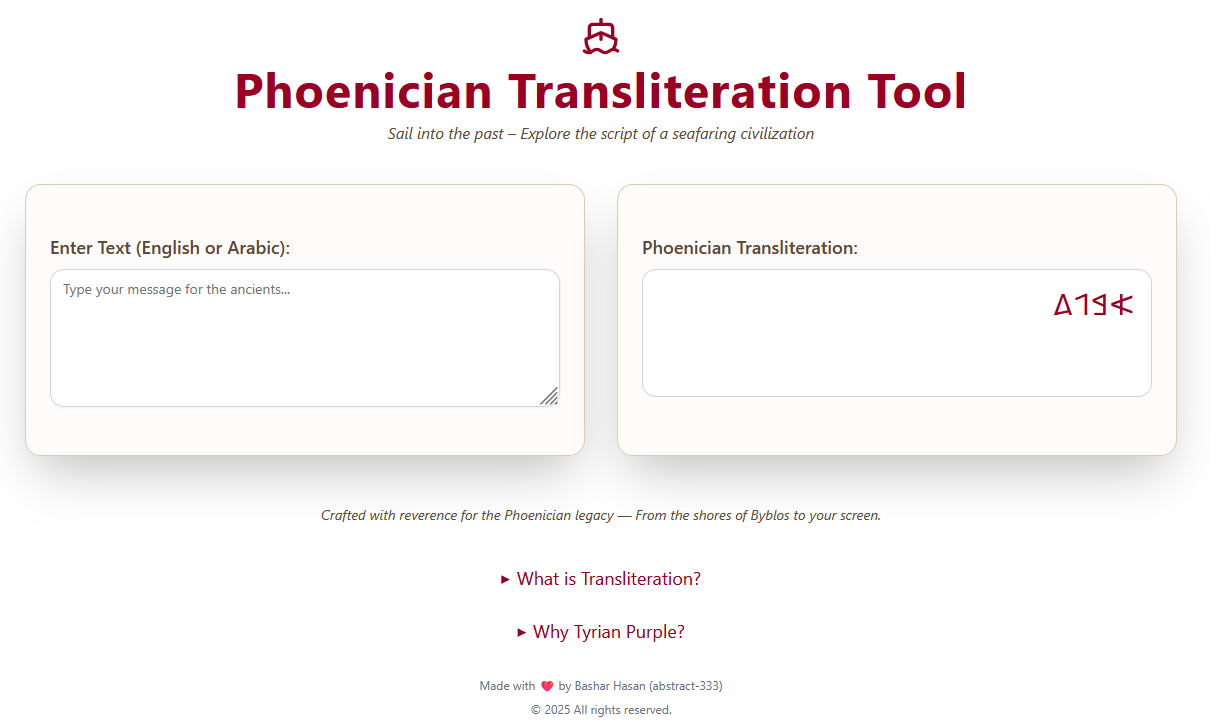
In the end, I managed to upload the site and get a fully working version online. Yes — I even added it to Google Search and made final tweaks without using any LLMs 😅.
But here's the catch: The code was… messy. Everything was mostly thrown into a single file, with different pieces mixed together. No structure, no maintainability.
It took me around 6–8 hours to fully debug and deploy it.
Can you imagine? The app was generated in 2 hours, but I spent 4 times that just trying to make it actually work.
That’s when I realized something important: If I had invested just 20 hours learning React properly, I probably could’ve:
-
Avoided a ton of debugging -
Known which library versions to use -
Used LLMs more like a **Lego kit** — asking for small, focused pieces of code -
And focused my energy on the **core logic**, not fixing broken scaffolding
Conclusion
As many people say, AI and LLMs are skill multipliers. If you bring nothing to the table — you’ll get nearly nothing back. (Just like me struggling with React 😅.)
Sure, tools like context7 promise to make LLMs (e.g., in Cursor) use the latest documentation versions. But I’ll write about that later. (Spoiler: it doesn’t work as well as you'd hope.)
Trying to build anything beyond a small tool using pure "vibe coding" — no architecture, no planning, just prompts — is painful. The code complexity scales faster than exponential, and debugging becomes a nightmare.
But if you treat LLMs like a Lego toolkit, everything changes.
Take the time to:
-
Design a solid architecture (yes, this might take hours!) -
Write a few key functions yourself -
Then use the LLM to generate small, self-contained parts that fit into your structure - Handle the hard logic manually — around 20–30% of the code
Don't ask it to write large functions across multiple files — that’s where hallucinations begin.
And yeah, stay tuned for my next article — where I’ll show a successful vibe coding case in FastAPI (where I actually know what I’m doing 😄).
Hit the reaction that match how you feel — and follow me to explore more!
References:
Phoenician Transliteration Tool Source Code
You can also find me there :)
Github
Medium
Comments
More Blog
View allcursorCursor Automations in 2026: wire event-triggered coding agents to Slack, CI, and timers
Cursor Automations in 2026: wire event-triggered coding agents to Slack, CI, and...
M
Manu ShuklaaiIndex Everything, or Read Everything? The Dilemma of Feeding Specs to AI in Multi-Repo Development
The specs exist. The AI just can't see them. I've always been the type who builds hobby...
S
Shunya ShidaamazonbedrockConnect Claude Code, Cursor and Codex to Amazon Bedrock's new console (2026)
Connect Claude Code, Cursor and Codex to Amazon Bedrock's new console (2026) Summary. On 5...
M
Manu ShuklaaiSpotting AI UI is too easy
There is a weird uncanny valley with LLM-generated UI right now. The code functions perfectly, but if...
H
Harish .saiSeven ranking frameworks, one search page, zero translation tables
I went down a rabbit hole this morning reading the late-2025 Juejin AI roundups side by side, and the...
N
ninghonggangmcpZendesk MCP: Let Claude Handle Your Support Tickets
Install guide and config at curatedmcp.com Zendesk MCP: Let Claude Handle Your Support...
C
curatedmcpReady-made automations for this
Workflows from the Neura Market marketplace related to this Cursor resource
- Learn JavaScript Coding with an Interactive RPG-Style Tutorial Gamen8n · $9.99 · Related topic
- Automate Daily Photo Background Removal with Photoroom and Google Driven8n · $9.99 · Related topic
- Automate Background Removal with MCP Server for AI Agentsn8n · $9.99 · Related topic
- Enhance Product Photos on Shopify with Picsarts Background Removermake · $4.99 · Related topic