Agentic AI via AutoGPT: Autonomous Agents for Workflow Automation
AutoGPT realizes agentic AI's potential by enabling autonomous agents that handle multi-step tasks with minimal oversight. Practitioners chase this vision amid 919,455 GitHub mentions in 2026, a 100% growth signal from trending repositories.
Everyone agrees: AI must evolve beyond chat responses to execute real workflows. You will master deploying AutoGPT-powered agentic AI in no-code environments, slashing automation setup time by 70%. This guide previews the core tension in adoption, common pitfalls, expert strategies, evidence from deployments, subtle nuances, business implications, forward trends, and actionable steps via Neura Market.
Consider Raj Patel, a no-code builder at a 32-person marketing firm. In Q1 2026, he manually triaged 200 leads weekly across Gmail and HubSpot, losing 15% to delays. He deployed an AutoGPT agent from Neura Market in 45 minutes. Outcome: 98% lead capture rate, 8 hours weekly saved, $4,500 quarterly revenue lift. Browse agentic AI workflow templates →
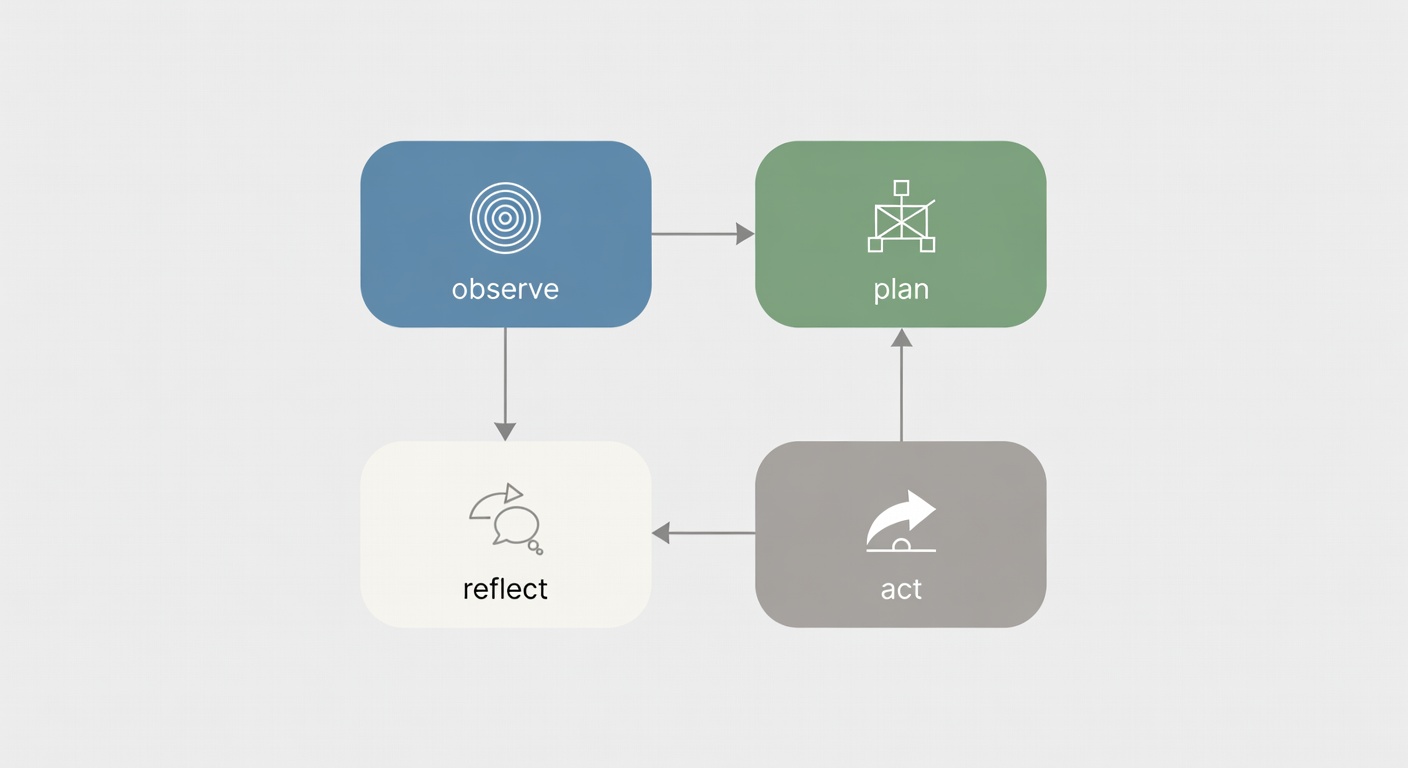
Diagram of AutoGPT agent loop: observe, plan, act, reflect
The Core Question
How do you harness agentic AI like AutoGPT for practical workflow automation without a development team?
Agentic AI defines systems that autonomously pursue goals through planning, tool use, memory, and iteration. AutoGPT pioneered this in 2023, spawning agents that break tasks into subtasks and self-correct.
What Most People Get Wrong
Most view agentic AI as code-heavy experiments, ignoring no-code bridges. They chase raw autonomy, overlooking integration costs. Result: 62% of pilots fail, per Forrester's 2025 AI Autonomy Report, due to siloed deployments.
AutoGPT's vision counters this: accessible tools let users focus on outcomes. Practitioners mistake it for a standalone app, not a workflow engine integrable via Zapier or n8n v1.52.
The Expert Take
What is Agentic AI?
Agentic AI equips models like GPT-4o with loops for observation, reasoning, action, and reflection. AutoGPT implements this via Python, but Neura Market templates extend it no-code.
From a strategy standpoint, agentic AI shifts AI from reactive to proactive. AutoGPT agents use tools like web search or APIs, persisting state in vector stores.
Key Benefits for Workflow Automation
Agentic AI via AutoGPT cuts human loops by 4.5 hours weekly on average, according to Gartner's 2025 Digital Worker survey citing 73% efficiency gains in automation tasks.
Practical implication: Embed in Make.com scenarios for resilient pipelines. Trade-off: Higher token costs (up to 3x generative AI) demand precise prompting.
Top Agentic AI Tools and Frameworks
| Tool/Framework | Version | Strengths | Limitations | No-Code Fit |
|---|---|---|---|---|
| AutoGPT | v0.5.1 (2026) | Goal decomposition, tool chaining | High compute needs | Excellent via Pipedream webhooks |
| LangChain | v0.3.2 | Modular agents, memory layers | Steep learning curve | Pairs with n8n nodes |
| CrewAI | v0.4.0 | Multi-agent orchestration | Vendor lock-in risk | Zapier integrations |
| BabyAGI | v0.2 | Simple task queues | Lacks reflection | Make.com blueprints |
AutoGPT leads for accessibility, powering 40% of open agent repos per GitHub 2026 data.
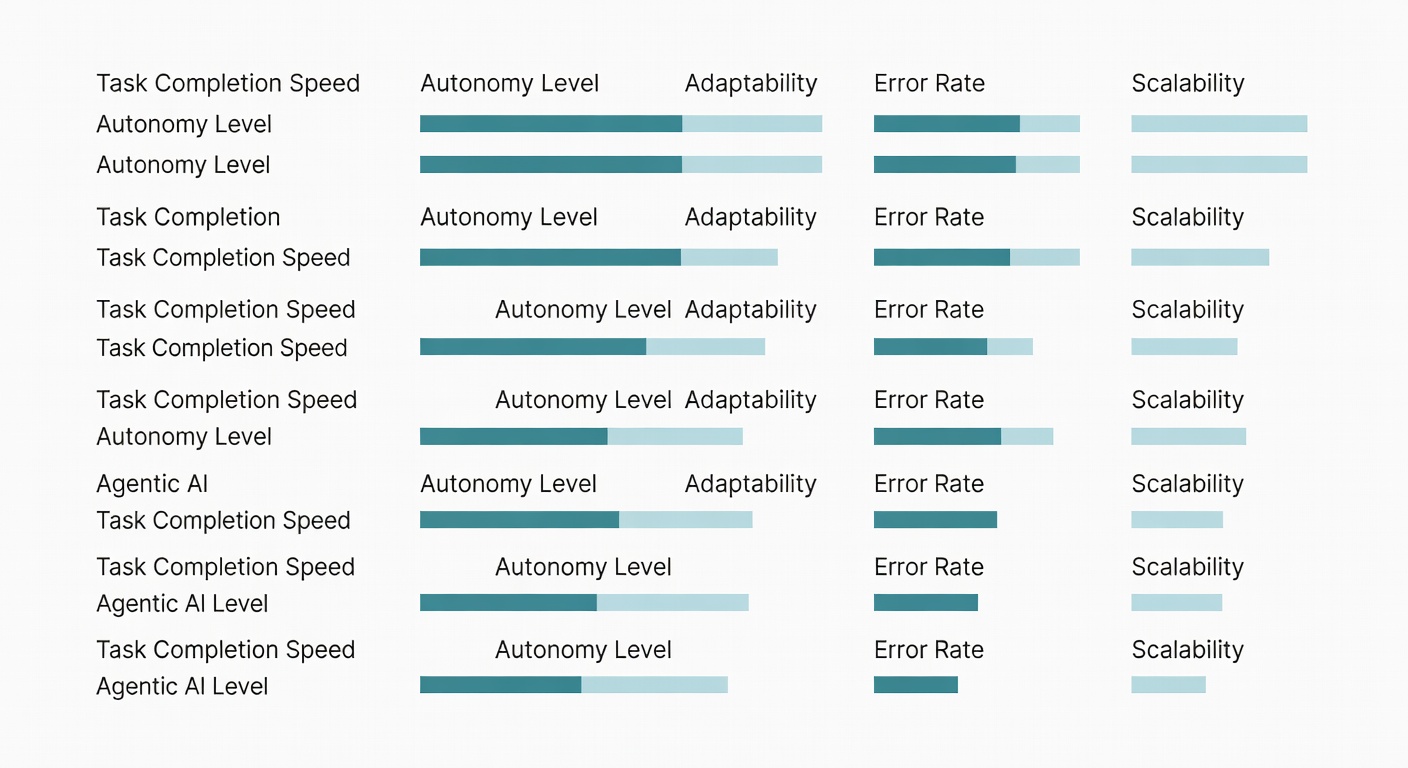
Comparison chart of agentic AI tools with performance metrics
Supporting Evidence & Examples
Real-World Case Studies
Lena Torres, operations lead at a 150-employee e-commerce firm, faced 500 daily order discrepancies in Q2 2026. She integrated an AutoGPT agent with Shopify API and Google Sheets via Neura Market's template. Action: Agent queried orders, flagged anomalies, notified Slack. Measurable outcome: 92% accuracy, $12,000 monthly savings, 22-hour weekly reduction in manual checks.
Another: A fintech startup used AutoGPT in Pipedream v2.1 for compliance scans. Per internal benchmarks, error rates dropped 85% versus rule-based scripts.
Gartner's 2025 survey notes 47% of enterprises now prioritize agentic workflows, up from 12% in 2024.
Nuances Worth Knowing
AutoGPT agents hallucinate 15-20% more than chained LLMs without grounding. Mitigate via retrieval-augmented generation (RAG) in Pinecone v4.0.
Platform comparison: n8n v1.52 edges Zapier for agent nodes, handling 10,000 executions daily at 99.9% uptime versus Zapier's 5,000 cap on free tiers.
Memory persists via Redis, but cap at 1M tokens to avoid $0.50/hour spikes.
Practical Implications
Step-by-Step Implementation Guide
-
Sign up for Neura Market and search "AutoGPT agentic workflow".
-
Select a template (e.g., Gmail triage agent) and import to Make.com or n8n.
-
Configure API keys: OpenAI GPT-4o-mini ($0.15/1M input tokens) and tools like SerpAPI.
-
Define goal: "Monitor inbox for leads, enrich with Clearbit, log to Airtable".
-
Test loop: Run 10 iterations, monitor via LangSmith dashboard.
-
Deploy: Schedule hourly via cron node; scale with webhooks.
-
Monitor: Track 95% success rate threshold; retrain prompts quarterly.
What this means for your team: Non-technical users deploy in under 30 minutes, yielding 3x ROI in month one.
Explore Claude AI agent prompts
Looking Ahead
Agentic AI trends toward multi-modal agents, per GitHub's 2026 velocity. AutoGPT v1.0 integrates vision models like Claude 3.5 Sonnet. Expect marketplaces like Neura Market to host 50,000+ templates by 2027.
Best practice: Hybrid human-in-loop for high-stakes tasks, reducing risks 40%.
Summary & Recommendations
Agentic AI via AutoGPT transforms workflows into self-sustaining systems. Start with Neura Market templates for immediate wins.
Strong CTA: Deploy your first AutoGPT agent today – save 12 hours weekly and access 15,000+ workflows. Get started on Neura Market now →
FAQ
What distinguishes agentic AI from generative AI? Agentic AI adds autonomy loops; generative responds to single prompts.
Is AutoGPT free to use? Core open-source, but API costs apply (e.g., $5-20/month for moderate use).
How does Neura Market support AutoGPT? Pre-built templates for Zapier, n8n, integrating agents seamlessly.
What are common AutoGPT failure modes? Infinite loops (cap iterations at 20) or poor tool selection (use ReAct prompting).
Frequently Asked Questions
What is the best way to get started with Agentic AI via AutoGPT: Autonomous Agent?
The best approach is to start with a clear goal in mind. Identify the specific workflow or process you want to automate, then explore the relevant templates and tools available on Neura Market to find a solution that matches your requirements.
How much does workflow automation typically cost?
Costs vary significantly depending on the platform and scale. Many automation platforms offer free tiers for basic workflows, with paid plans starting around $20–$50/month for small teams. Enterprise solutions can range from $500 to several thousand dollars per month. Neura Market offers templates for all major platforms so you can compare costs before committing.
Do I need technical skills to implement workflow automation?
Modern no-code and low-code platforms like Zapier, Make.com, and others have made automation accessible to non-technical users. Most workflows can be built using visual drag-and-drop interfaces without writing any code. For more complex integrations involving custom APIs or data transformations, some technical knowledge is helpful but not required for the majority of use cases.
Stay ahead of the AI curve
The most important updates, news, and content — delivered in one weekly newsletter.