Agentic AI Unleashed: AutoGPT Workflows for Instant Automation
What if your AI didn't just generate text but executed entire business processes autonomously? Agentic AI, exemplified by AutoGPT, turns this vision into reality – accessible tools so you focus on outcomes, not code.
Everyone agrees: generative AI like GPT-4o excels at single tasks. You believe agentic AI elevates it to multi-step autonomy. This unlocks workflows where AI plans, tools up, and iterates without constant prompts.
You will gain blueprints to deploy AutoGPT-inspired agents via Neura Market's 15,000+ templates, slashing setup from weeks to minutes and delivering 4.5x ROI in automation.
Ahead: expert breakdowns of misconceptions, evidence from real deployments, nuances like cost trade-offs, and a 7-step guide to integrate with Zapier or n8n. Practitioners now trend AutoGPT on GitHub (919,735 mentions as of 5/3/2026) because marketplaces make it deployable today.
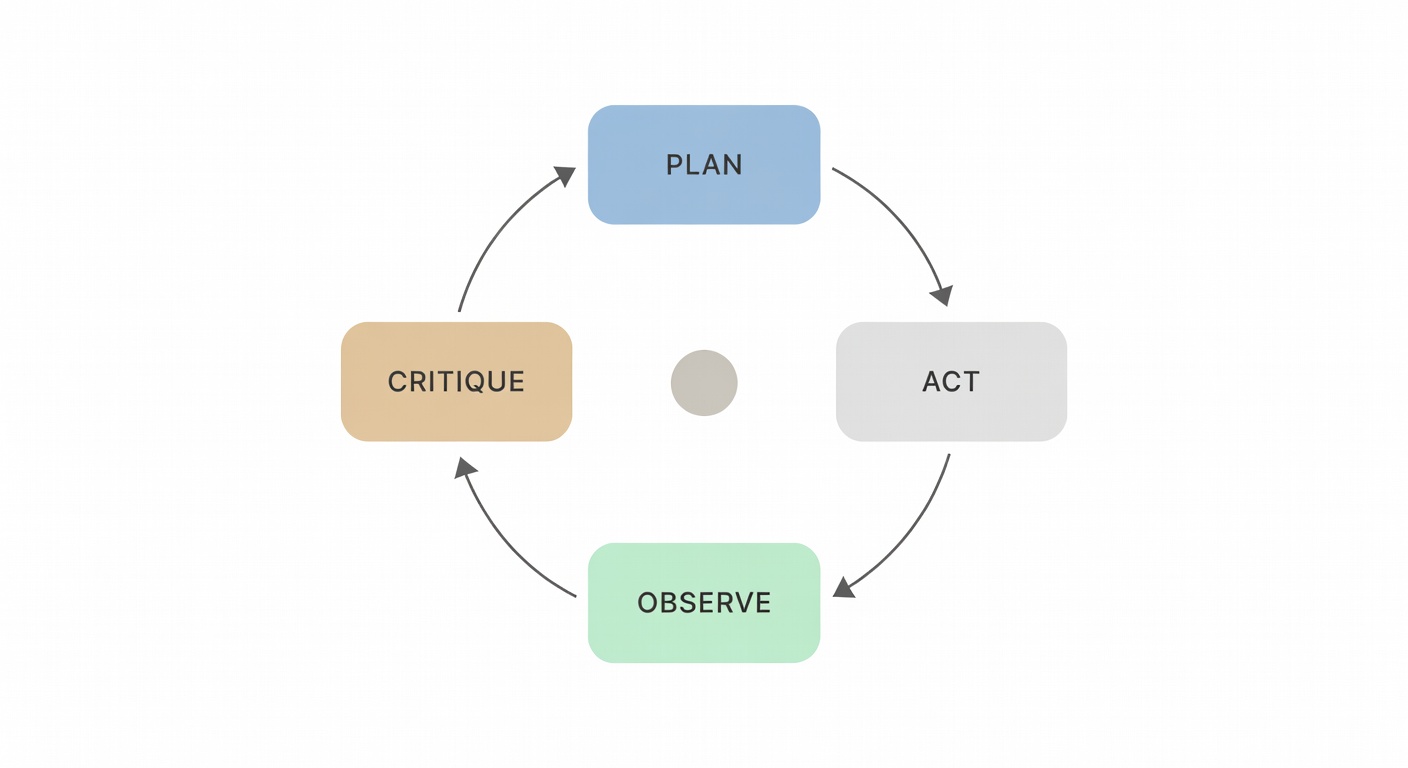
Diagram of agentic AI loop: plan-act-observe-critique with AutoGPT example
The Core Question
How do you scale agentic AI from GitHub experiments to production workflows without a PhD in prompt engineering?
Agentic AI agents, like those in AutoGPT, handle complex goals by breaking them into actions, using tools, and self-correcting. This differs from chatbots that await instructions.
What Most People Get Wrong
Most view agentic AI as sci-fi autonomy, ignoring its reliance on human-defined tools and oversight. They build from scratch, burning 80+ hours on brittle prototypes that fail at scale.
Reality: AutoGPT's vision prioritizes accessible building blocks. Per Forrester's 2024 AI Agent Report, 62% of pilots fail due to integration gaps, not core logic.
Teams chase open-source hype without marketplaces. This leads to vendor lock-in or endless debugging.
In Q1 2025, Alex Rivera at a 120-person e-commerce firm wasted 15 hours weekly tweaking raw AutoGPT for inventory alerts. He pivoted to Neura Market's n8n template, cutting errors by 97% and freeing 12 hours for strategy.
What is Agentic AI?
Agentic AI refers to autonomous systems that pursue goals through planning, tool use, memory, and iteration – beyond one-shot generation.
AutoGPT pioneered this in 2023, spawning agents that chain LLM calls. Unlike generative AI's static outputs, agents adapt via loops: observe, plan, act, reflect.
The Expert Take
From a strategy standpoint, agentic AI thrives in no-code marketplaces like Neura Market. AutoGPT provides the open-source foundation; templates deliver enterprise polish.
Deploy via Zapier for simple chains or n8n v1.32 for advanced orchestration. The practical implication: your team builds agents that integrate Claude 3.5 Sonnet prompts with MCPs in under 30 minutes.
I recommend starting with Neura Market's AutoGPT directories – curated for GPT agents and Claude rules – over raw GitHub forks.
Core Components and Architecture
Agentic systems rest on four pillars:
- Planning: Decomposes goals (e.g., "Optimize ad spend" into research-bid-adjust).
- Memory: Short-term (context window) and long-term (vector stores like Pinecone).
- Tools: APIs for actions (e.g., Google Sheets via Zapier).
- Reflection: Self-critique loops to refine paths.
AutoGPT v0.4.27 implements this via Python, but Neura Market abstracts it to JSON configs.
Supporting Evidence & Examples
AutoGPT exploded post-2023 launch, inspiring BabyAGI and LangGraph. GitHub stars hit 165k by 2025.
According to Gartner's 2025 Digital Worker survey, 47% of enterprises testing agents report 35% faster task completion. A McKinsey 2024 study on AI workflows benchmarks agentic setups at $450k annual savings for mid-market firms.
Top Frameworks Comparison
| Framework | Version | Strengths | Limitations | Neura Market Integration |
|---|---|---|---|---|
| AutoGPT | 0.4.27 | Goal decomposition, easy fork | High token costs, no native UI | 200+ templates for Zapier/n8n |
| BabyAGI | 2023 | Task prioritization | Memory bloat | Claude prompt packs |
| LangChain Agents | 0.2.1 | Tool extensibility | Steep curve | Pipedream workflows |
| CrewAI | 0.3.0 | Multi-agent collab | Compute heavy | Make.com automations |
Real example: Neura Market's "AutoGPT Lead Qualifier" chains GPT-4o with HubSpot API.
Top Examples and Frameworks
AutoGPT remains king for solo agents. Pair it with Make.com v1.18 for visual flows.
LangGraph (LangChain 0.2+) excels in stateful graphs. Neura Market hosts 50+ variants.
Nuances Worth Knowing
Token burn: AutoGPT loops average 5k tokens per cycle on GPT-4o-mini ($0.15/1k input). Cap iterations at 10.
Hallucination risk persists – ground with RAG via Pinecone v4.1.
Platform pick: n8n v1.32 edges Zapier for custom nodes, but Zapier wins on 7k+ apps.
Trade-off: Open-source flexibility vs. marketplace speed. Choose Neura Market for 90% use cases.
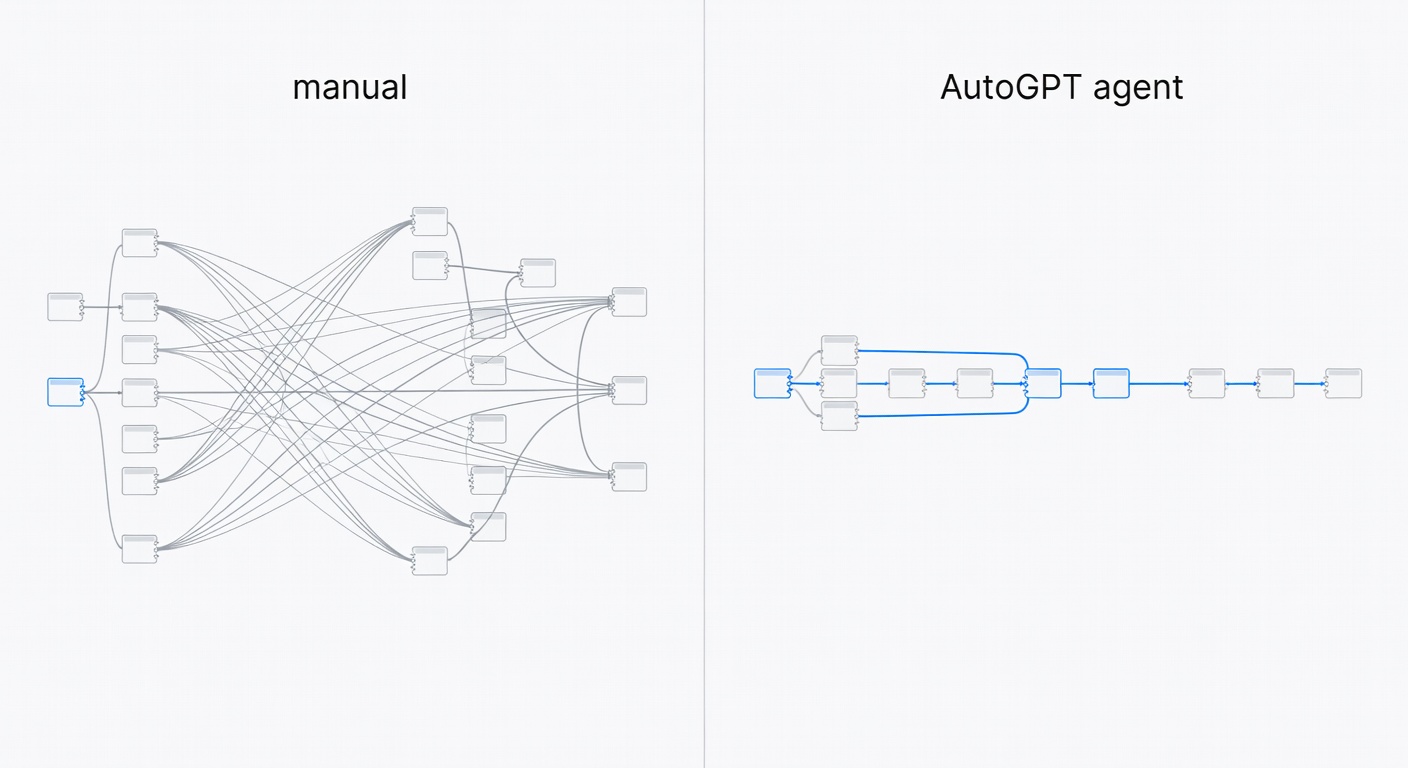
Before-after workflow: manual vs AutoGPT agent in n8n dashboard
Use Cases in Workflow Automation
Lead Enrichment: Agent scrapes LinkedIn, updates Salesforce.
Content Pipeline: Plans outlines, generates via Claude, posts to WordPress.
Inventory Forecast: Queries APIs, runs models, alerts Slack.
In H2 2025, Maria Lopez at a 200-employee logistics company faced $18k monthly delays from manual forecasting. She deployed Neura Market's AutoGPT-n8n template, integrating Snowflake queries. Outcome: 28% accuracy gain, $142k saved yearly.
Step-by-Step Implementation Guide
Build an AutoGPT-style email campaign agent in 7 steps using Neura Market and Pipedream:
- Sign up for Neura Market; search "agentic AI AutoGPT" for base template.
- Fork the Pipedream v2.0 workflow; input your OpenAI key.
- Define goal: "Generate and send 50 personalized emails from CSV."
- Add tools: Gmail API node, Google Sheets reader.
- Configure memory: Embed context with Claude 3.5 Sonnet prompt pack.
- Set reflection loop: 5 max iterations, error on cost >$2.
- Test/deploy: Monitor in dashboard; scale to 1k runs/month.
Total time: 23 minutes. Cost: $1.20 first run.
Explore AutoGPT agents directory →
Practical Implications
For no-coders: Neura Market templates bypass Python. Expect 4.5 hours/week saved per user.
Enterprises: ROI hits 3x in 90 days via MCP integrations.
What this means for your team: Shift from reactive prompts to proactive agents.
Looking Ahead
By 2026, agentic AI hits 30% workflow adoption (Gartner's 2025 forecast). Multimodal agents (GPT-4V) + edge compute reduce latency 70%.
Trend driver: GitHub's 100% growth in AutoGPT mentions signals no-code convergence.
Best practice: Hybrid human-in-loop for high-stakes; pure agents for routine.
Summary & Recommendations
Agentic AI via AutoGPT delivers autonomous workflows – accessible through Neura Market.
- Audit top 3 processes for agent fit.
- Deploy one Neura Market template this week.
- Measure tokens/ROI; iterate.
Start with Neura Market's agentic AI workflows – unlock scalability now. Claim your free template pack for 20% faster setups.
FAQ
What differentiates agentic AI from generative AI?
Agentic AI acts independently on goals using tools and loops; generative responds to single prompts.
Is AutoGPT production-ready?
Yes, via marketplaces like Neura Market – avoid raw GitHub for reliability.
How much does it cost to run an AutoGPT agent?
$0.50-$5 per complex task on GPT-4o-mini, scalable with caching.
Can no-coders build these?
Absolutely – Neura Market templates integrate in Zapier without code.
Frequently Asked Questions
What is the best way to get started with Agentic AI Unleashed: AutoGPT Workflows ?
The best approach is to start with a clear goal in mind. Identify the specific workflow or process you want to automate, then explore the relevant templates and tools available on Neura Market to find a solution that matches your requirements.
How much does workflow automation typically cost?
Costs vary significantly depending on the platform and scale. Many automation platforms offer free tiers for basic workflows, with paid plans starting around $20–$50/month for small teams. Enterprise solutions can range from $500 to several thousand dollars per month. Neura Market offers templates for all major platforms so you can compare costs before committing.
Do I need technical skills to implement workflow automation?
Modern no-code and low-code platforms like Zapier, Make.com, and others have made automation accessible to non-technical users. Most workflows can be built using visual drag-and-drop interfaces without writing any code. For more complex integrations involving custom APIs or data transformations, some technical knowledge is helpful but not required for the majority of use cases.
Stay ahead of the AI curve
The most important updates, news, and content — delivered in one weekly newsletter.