

Flowable
FreemiumStreamline business processes with intelligent, low-code automation.
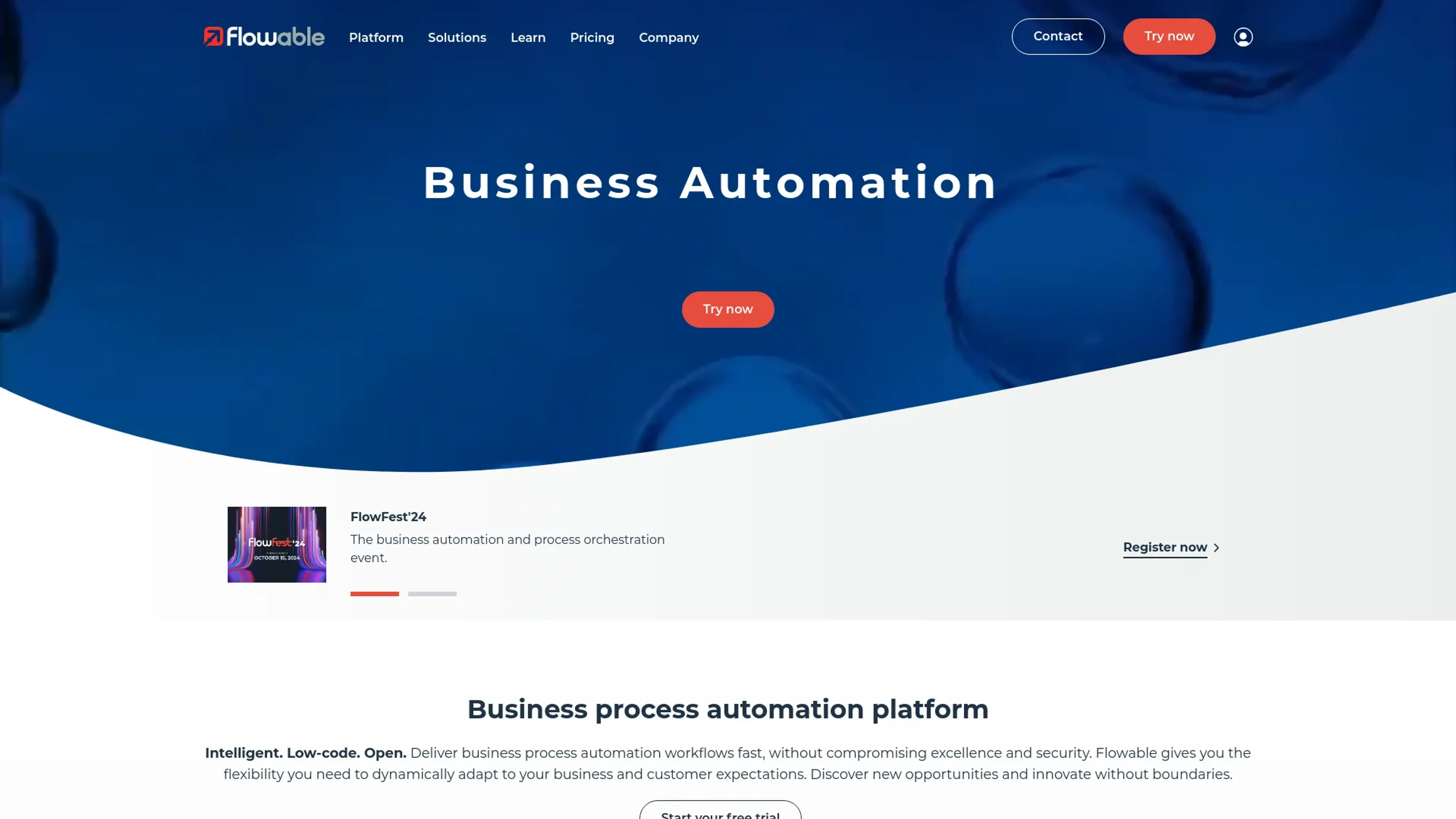
About Flowable
In the realm of business process automation (BPA), Flowable distinguishes itself as a sophisticated platform designed to streamline and optimize business operations. Flowable is an intelligent, low-code business automation tool that empowers enterprises to adapt swiftly to evolving business needs without extensive coding. By leveraging open standards and architecture, Flowable provides a flexible and scalable solution for automating and innovating processes. It is well-suited for optimizing complex workflows and integrating AI capabilities into business operations.
Key Features
- Intelligent Automation: Combines case, process, and decision models to automate complex business scenarios effectively.
- Low-Code Development: Facilitates the creation of enterprise-grade applications with minimal coding, making development accessible to non-technical users.
- Open Standards and Architecture: Avoids vendor lock-in and integrates seamlessly into any IT landscape, providing flexibility.
- Scalable Solutions: Supports large-scale deployments, meeting the needs of global enterprises.
- AI-Enhanced Capabilities: Incorporates AI to enhance and support human decision-making processes.
Pros
- Efficiency Gains: Reduces the time and effort needed to manage and execute business processes, leading to significant productivity improvements.
- Cost-Effective: Lowers IT costs by minimizing the need for extensive coding resources and technical expertise.
- Flexibility: Adapts quickly to changing business environments due to its open architecture.
- User Empowerment: Allows users across various business functions to develop and deploy solutions, fostering innovation and agility.
Cons
- Learning Curve: New users may need time to familiarize themselves with the platform’s extensive features and capabilities.
- Integration Complexity: Integrating with complex existing systems can pose challenges and may require additional effort.
Use Cases
- Flowable caters to a wide range of industries, demonstrating its versatility and capability:
- Financial Services: Automates compliance processes and customer service operations, enhancing efficiency and accuracy.
- Healthcare: Manages patient records and hospital workflows, improving administrative efficiency and patient care.
- Manufacturing: Streamlines supply chain management and production line processes, boosting operational performance.
- Telecommunications: Optimizes customer relationship management and service fulfillment, enhancing customer satisfaction.
- Uncommon Use Cases: Utilized by academia for research data management and by non-profits for donor engagement and fund management.
Pricing
Free Tier: Explore Flowable's features with a free trial, allowing you to evaluate its capabilities before making a commitment. Enterprise Solutions: Offers custom pricing tailored to the specific needs and scale of your organization. Disclaimer: For the most accurate and current pricing details, please refer to the official Flowable website.
What Makes It Unique
Flowable stands out for its integration of adaptive automation with a low-code approach within an open, standards-based architecture. This combination accelerates deployment times and enhances the platform’s adaptability to complex business requirements, positioning it as a top choice for enterprises seeking innovation and scalability.
Ratings
Accuracy and Reliability: 4.7/5 Ease of Use: 4.3/5 Functionality and Features: 4.8/5 Performance and Speed: 4.6/5 Customization and Flexibility: 4.5/5 Data Privacy and Security: 4.9/5 Support and Resources: 4.4/5 Cost-Efficiency: 4.2/5 Integration Capabilities: 4.5/5 Overall Score: 4.5/5
Key Features
Pros & Cons
- Efficiency Gains: Reduces the time and effort needed to manage and execute business processes, leading to significant productivity improvements.
- Cost-Effective: Lowers IT costs by minimizing the need for extensive coding resources and technical expertise.
- Flexibility: Adapts quickly to changing business environments due to its open architecture.
- User Empowerment: Allows users across various business functions to develop and deploy solutions, fostering innovation and agility.
- Learning Curve: New users may need time to familiarize themselves with the platform’s extensive features and capabilities.
- Integration Complexity: Integrating with complex existing systems can pose challenges and may require additional effort.
Best For
Alternatives to Flowable
Imagica
Create AI Apps in Minutes Without Writing Code Using Imagica AI
Lazy
Simplify Web App Development Using Lazy AI
Blaze.tech
Blaze: A Smarter No-Code Platform
Draftbit
Easily create and customize mobile apps, including push notifications and analytics, without coding.
Magick
Unlock the Future of AI Development with Magick
Forms.app
Transform Your Form Creation Process with forms.app