

Parabola
FreemiumStreamline workflows, automate tasks, enhance productivity effortlessly.
About Parabola
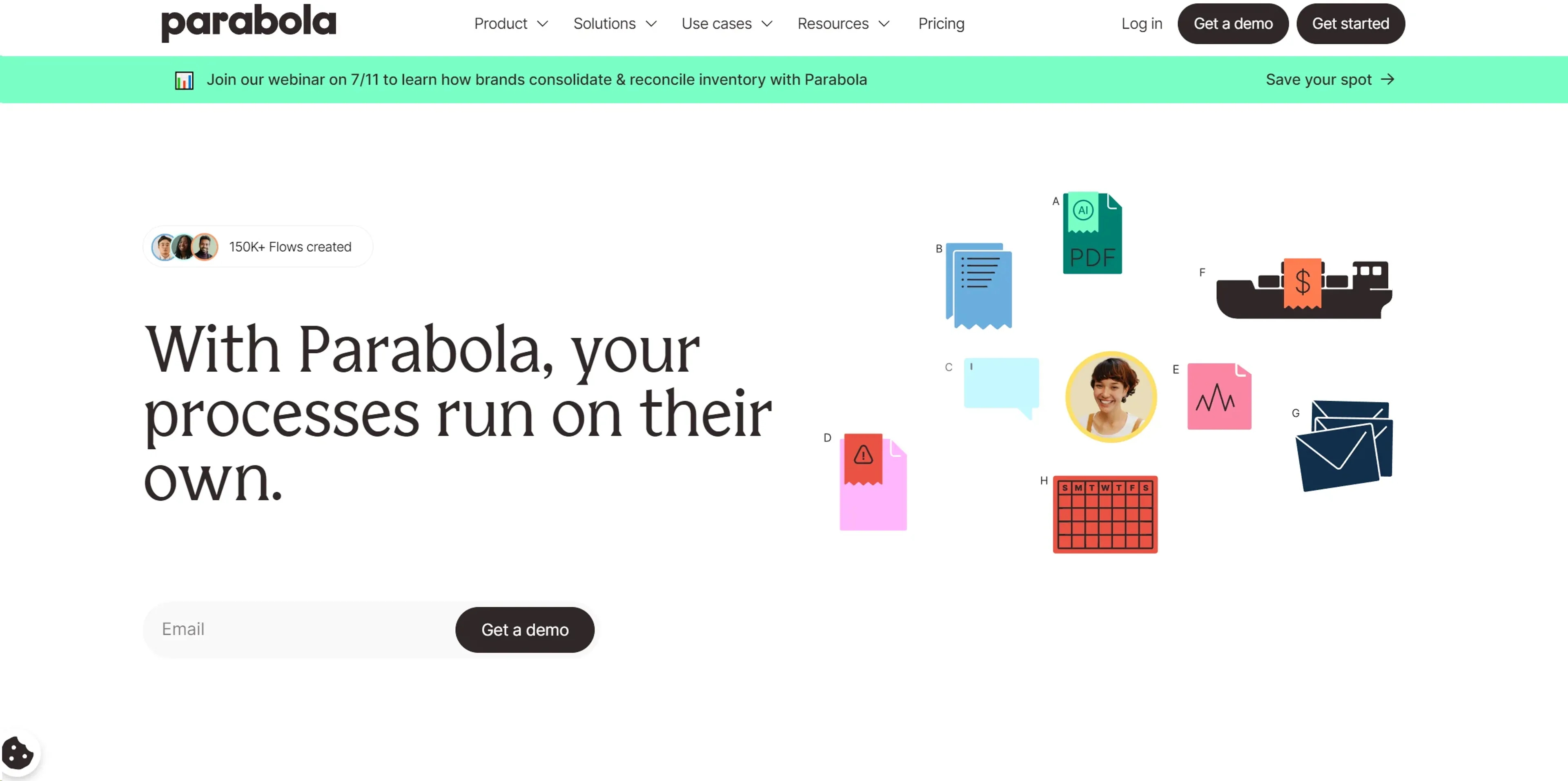
Parabola is a robust automation platform designed to transform how businesses handle their internal processes, particularly in industries like Retail & E-commerce, Freight & Logistics, and SaaS. It simplifies complex workflows by automating tasks that traditionally involve manual data manipulation and spreadsheet management. Here’s a detailed overview:
Key Features
- Automated Workflows: Design and implement custom workflows to automate routine tasks, reducing manual spreadsheet handling.
- Intuitive Drag-and-Drop Interface: User-friendly interface for easy creation of automated processes.
- Advanced Integrations: Seamless integration with platforms like Shopify, ERP systems, and Warehouse Management Systems (WMS).
- Real-Time Data Handling: Processes data in real-time, ensuring up-to-date information for timely decision-making.
- Customizable Reports and Notifications: Tailor reports and set notifications for various triggers to keep stakeholders informed.
Pros
- Enhanced Efficiency: Drastically reduces time spent on manual tasks, improving operational efficiency.
- Cost Reduction: Saves on labor costs and minimizes human error through automation.
- Scalability: Easily scales to handle increased workload, suitable for businesses of all sizes.
- User Empowerment: Enables non-technical users to build and manage workflows independently.
Cons
- Learning Curve: New users may require time to fully grasp all functionalities.
- Dependency on Integrations: Experience may be limited if required tools are not supported.
- Pricing Transparency: Detailed pricing information is available upon request, tailored to business needs.
Use Cases
- Retail & E-commerce: Automates inventory updates and order processing.
- Freight & Logistics: Streamlines data audits and shipping processes.
- SaaS Companies: Manages customer data and automates billing operations.
- Supply Chain Managers: Enhances vendor management and performance tracking.
- Uncommon Use Cases: Used in academia for research data management and by non-profits for donor data processing.
Pricing
Free Tier: Basic version available for small businesses and those new to automation. Subscription Plans: Detailed plans tailored to business size and needs. Disclaimer: For the most accurate and current pricing details, visit the official Parabola website.
What Makes It Unique
Parabola stands out for its user-friendly design that democratizes complex workflow automation without requiring deep technical knowledge. This inclusivity, combined with powerful automation capabilities and extensive integrations, makes it a versatile tool across industries.
Ratings
Accuracy and Reliability: 4.8/5 Ease of Use: 4.6/5 Functionality and Features: 4.7/5 Performance and Speed: 4.9/5 Customization and Flexibility: 4.5/5 Data Privacy and Security: 4.8/5 Support and Resources: 4.3/5 Cost-Efficiency: 4.6/5 Integration Capabilities: 4.7/5 Overall Score: 4.6/5
Key Features
Pros & Cons
- Enhanced Efficiency: Drastically reduces time spent on manual tasks, improving operational efficiency.
- Cost Reduction: Saves on labor costs and minimizes human error through automation.
- Scalability: Easily scales to handle increased workload, suitable for businesses of all sizes.
- User Empowerment: Enables non-technical users to build and manage workflows independently.
- Learning Curve: New users may require time to fully grasp all functionalities.
- Dependency on Integrations: Experience may be limited if required tools are not supported.
- Pricing Transparency: Detailed pricing information is available upon request, tailored to business needs.
Best For
Alternatives to Parabola
TableFlow
UseChatGPT
Automatically generate text, translate from any website, and summarize complex information effortlessly.
Voxengo DeNoiser
Remove hiss, isolate & reduce noise, preserve original audio with advanced algorithms and presets.
AI Shopify Product Reviews
Boost Sales Instantly With Automated Social Proof
gptcli
Automate budgeting, generate reports, and track finances in one place with an intuitive interface.
Thisfursonadoesnotexist.com