

Unify
FreemiumOptimize LLM performance, cost, and speed via unified API.
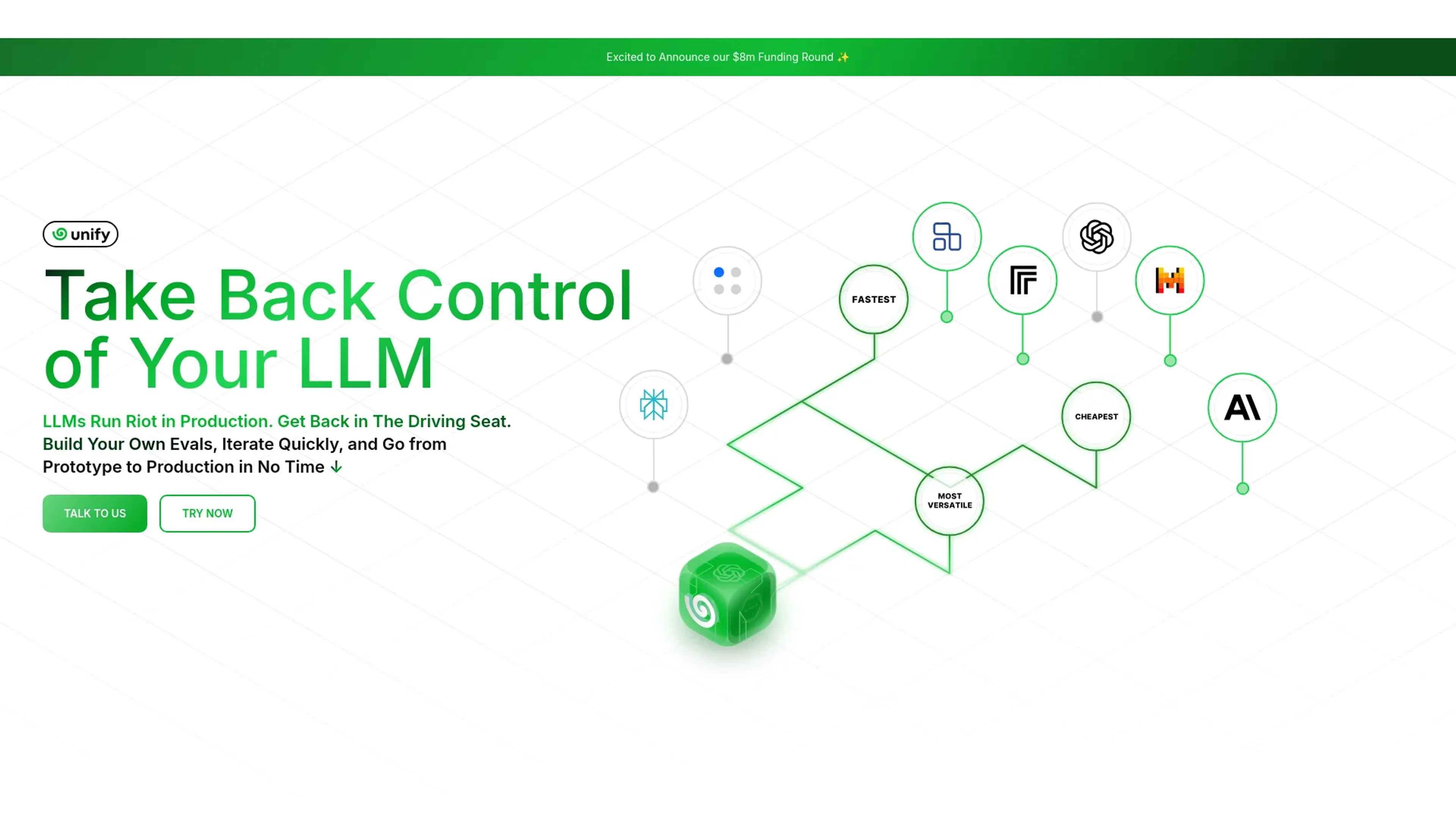
About Unify
Unify is a groundbreaking AI tool designed to optimize the performance, cost, and speed of Large Language Models (LLMs). It enables users to combine multiple LLMs from various providers through a single API, ensuring the best possible response for each query. Unify is ideal for developers, data scientists, and AI engineers who need to manage and deploy LLMs efficiently, providing a streamlined solution to navigate the complexities of the LLM landscape.
Key Features
- Unified API Access: Integrate all LLMs from different providers using a single API key, simplifying the management process.
- Custom Routing: Personalize routing based on your specific cost, latency, and output quality requirements.
- Real-time Benchmark Data: Access the latest benchmark data refreshed every 10 minutes to ensure optimal performance.
- Modular Design: Tailor the tool to fit your unique needs, with customizable metrics and routing algorithms.
- Performance Optimization: Automatically route queries to the fastest and most cost-effective LLMs available.
Pros
- Time Efficiency: Significantly reduces the time required to manage and deploy multiple LLMs.
- Cost-Effective: Optimizes cost by routing queries to the most economical models.
- High Customizability: Offers extensive customization options to fit specific user needs.
- Enhanced Performance: Ensures peak performance by using up-to-date benchmark data.
Cons
- Initial Learning Curve: May require some time to familiarize oneself with all the advanced features.
- Dependency on Third-party Providers: Performance and cost are dependent on the available LLM providers.
Use Cases
- E-commerce Businesses: Leveraging Unify to enhance customer service chatbots and recommendation engines.
- Digital Marketing Agencies: Utilizing the tool to optimize content generation and campaign management.
- AI Research Labs: Employing Unify for efficient model evaluation and deployment.
- Software Development Firms: Integrating Unify to streamline AI capabilities in their applications.
- Uncommon Use Cases: Adopted by financial institutions for fraud detection models; used by healthcare providers for patient data analysis.
Pricing
Free Tier: Experience Unify with a $50 free credit for new signups. Disclaimer: Please note that pricing information may not be up to date. For the most accurate and current pricing details, refer to the official Unify website.
What Makes It Unique
Unify stands out with its ability to combine multiple LLMs into a single, cohesive system, optimizing for quality, speed, and cost-efficiency. This unique feature allows users to leverage the strengths of various models without being locked into one provider, making it a versatile and powerful tool for a wide range of AI applications.
Ratings
Accuracy and Reliability: 4.8/5 Ease of Use: 4.5/5 Functionality and Features: 4.7/5 Performance and Speed: 4.9/5 Customization and Flexibility: 4.6/5 Data Privacy and Security: 4.4/5 Support and Resources: 4.3/5 Cost-Efficiency: 4.8/5 Integration Capabilities: 4.7/5 Overall Score: 4.7/5
Key Features
Pros & Cons
- Time Efficiency: Significantly reduces the time required to manage and deploy multiple LLMs.
- Cost-Effective: Optimizes cost by routing queries to the most economical models.
- High Customizability: Offers extensive customization options to fit specific user needs.
- Enhanced Performance: Ensures peak performance by using up-to-date benchmark data.
- Initial Learning Curve: May require some time to familiarize oneself with all the advanced features.
- Dependency on Third-party Providers: Performance and cost are dependent on the available LLM providers.
Best For
Alternatives to Unify
Orimon
Create chatbots, respond to inquiries, gain insights - all in minutes.
Chatbros
AI-powered chatbot for sales, customer support, and lead generation.
PitchFit
Practice every critical pitch using AI simulations and real-time coaching.
AI Sidekick
Boost Team Performance Using AI Sidekick
Professionalize It To Me
Professionalize Your Communication and Productivity Effortlessly
Tars
Build automated conversations, conduct customer research, and provide efficient customer support.