PreprintCommunications of the ACM
ImageNet classification with deep convolutional neural networks
Alex Krizhevsky, Ilya Sutskever et al.
130k2017
0
Citations
0
Influential Citations
—
Venue
2024
Year
A 12B parameter natively multimodal vision-language model, trained with interleaved image and text data demonstrating strong performance on multimodal tasks, and excels in instruction following.
The race to build capable multimodal AI models has largely been dominated by closed-source systems like GPT-4o and Gemini. Pixtral breaks this trend by releasing open-weight models that not only match but sometimes exceed proprietary counterparts on key benchmarks. Its natively multimodal design—trained from scratch on interleaved images and text—avoids the pitfalls of post-hoc vision attachments, enabling more coherent reasoning across modalities. For practitioners, Pixtral offers a practical, high-performance alternative that can be fine-tuned and deployed without vendor lock-in.

Pixtral 12B is built on Mistral Nemo, a 12B parameter decoder-only language model. To handle images, the authors train a new 400M parameter vision encoder called Pixtral-ViT from scratch. This encoder introduces four key innovations over standard architectures:
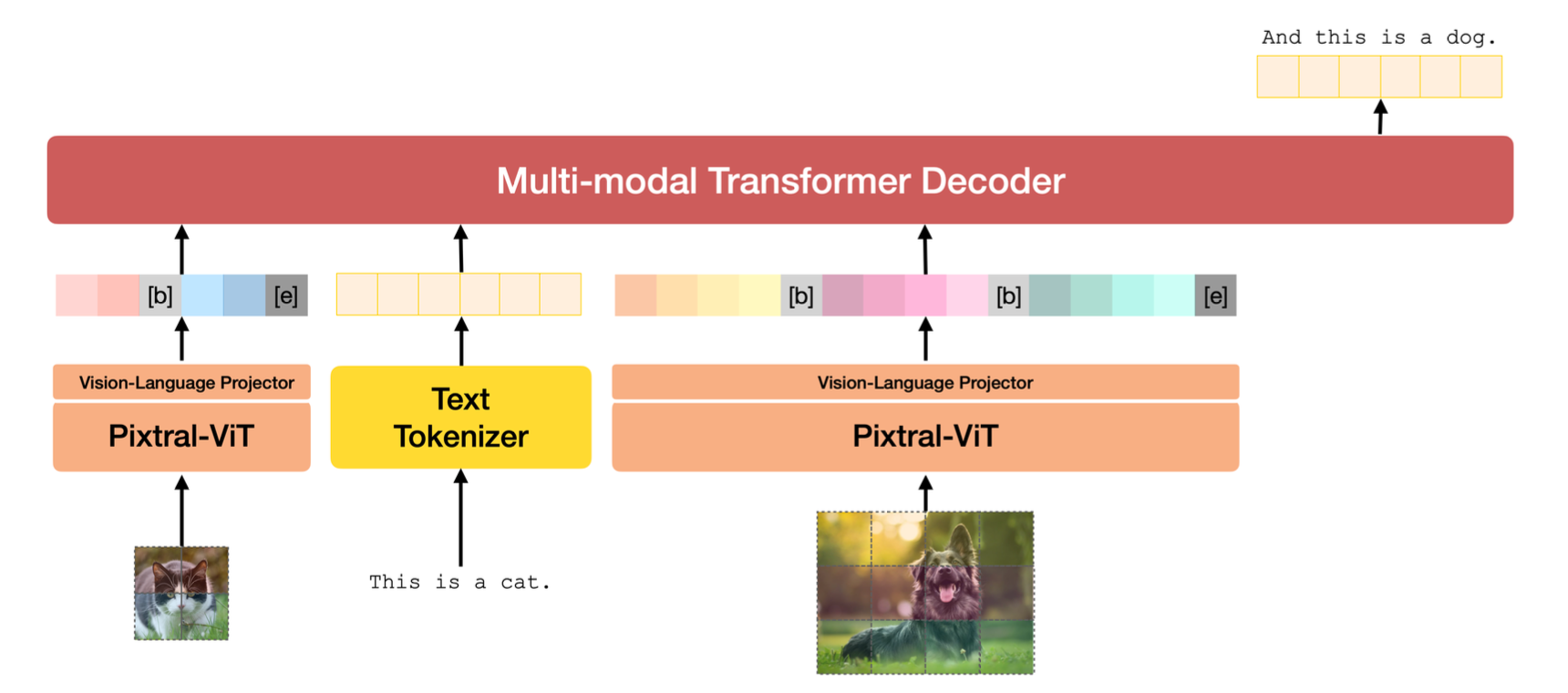
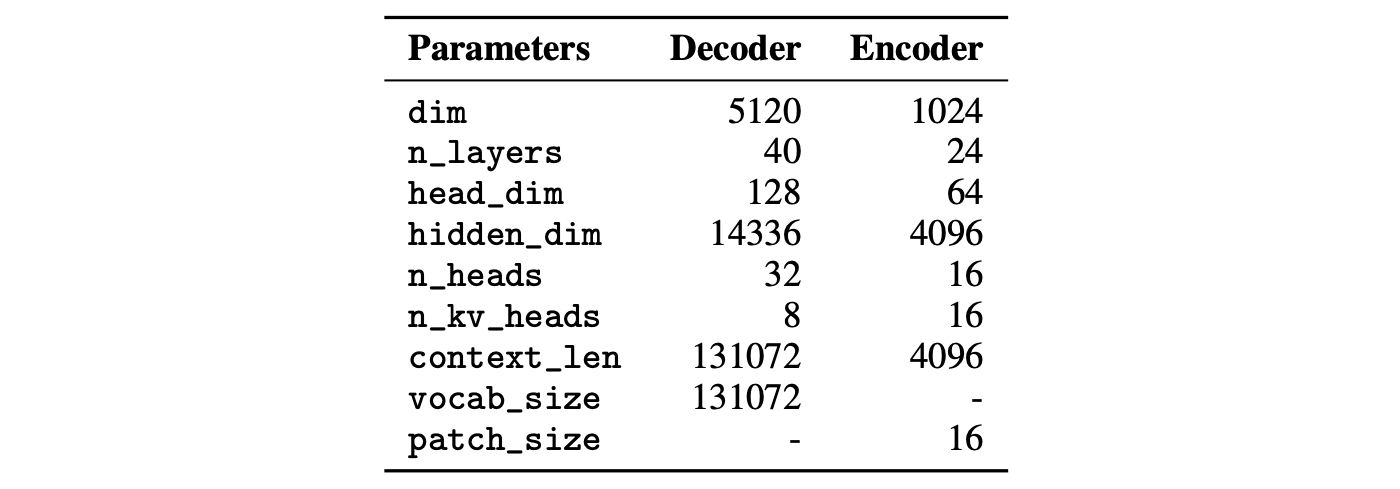
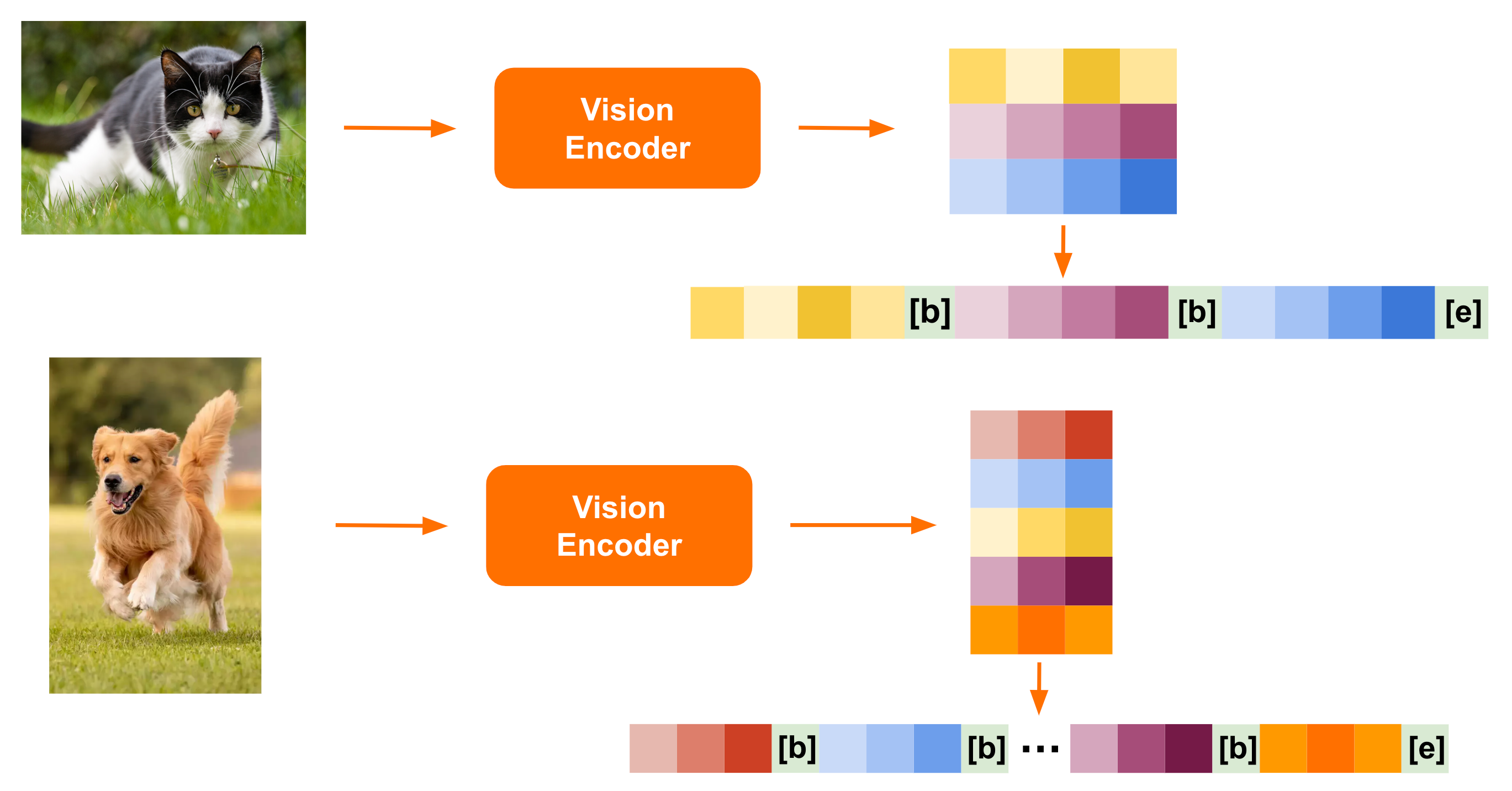
The vision encoder outputs are transformed via a two-layer MLP (with GeLU activation) to match the decoder’s embedding size. The multimodal decoder treats image tokens identically to text tokens, using causal self-attention and 1D RoPE. This design enables multi-image conversations and supports a 128K token context window.
Multimodal Performance:
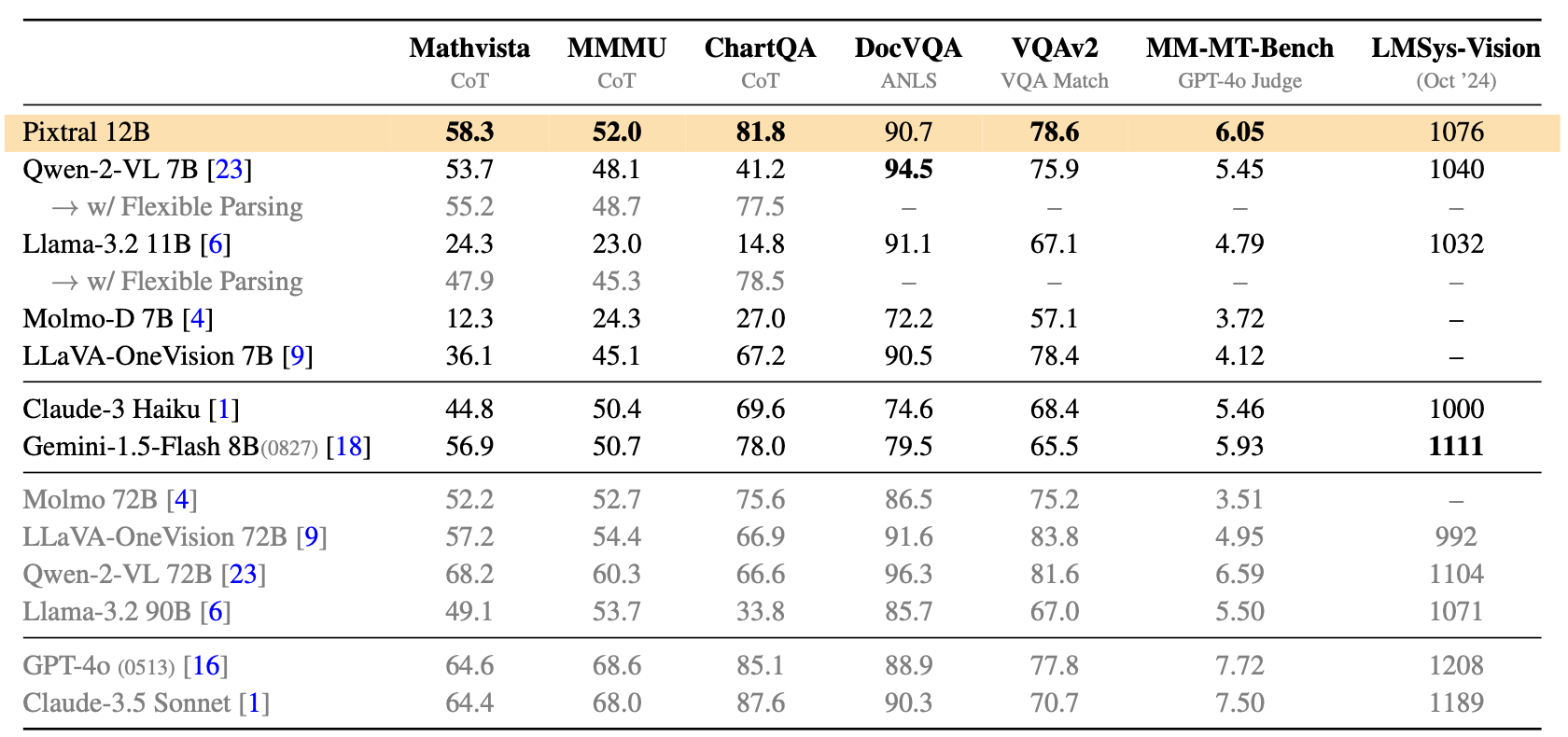
Pixtral 12B significantly outperforms comparable open-source models on MM-MT-Bench and LMSys Vision Arena, and even approaches the performance of much larger models like Qwen2-VL 72B and Llama-3.2 90B on LMSys Vision Arena.
Language Performance:
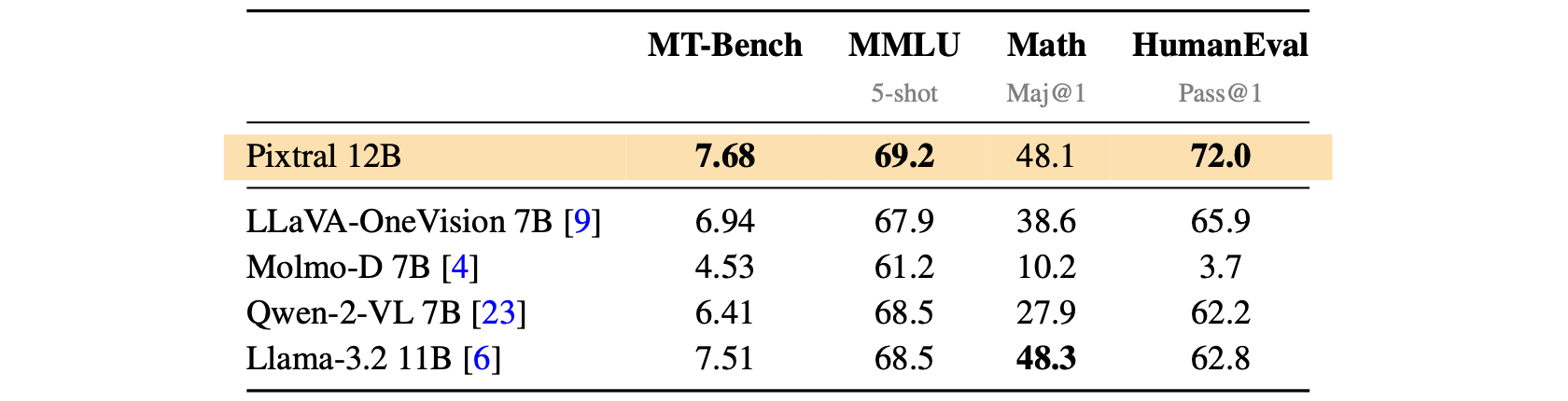
The model maintains strong text-only benchmark scores, demonstrating balanced capability across modalities.
Prompt selection:
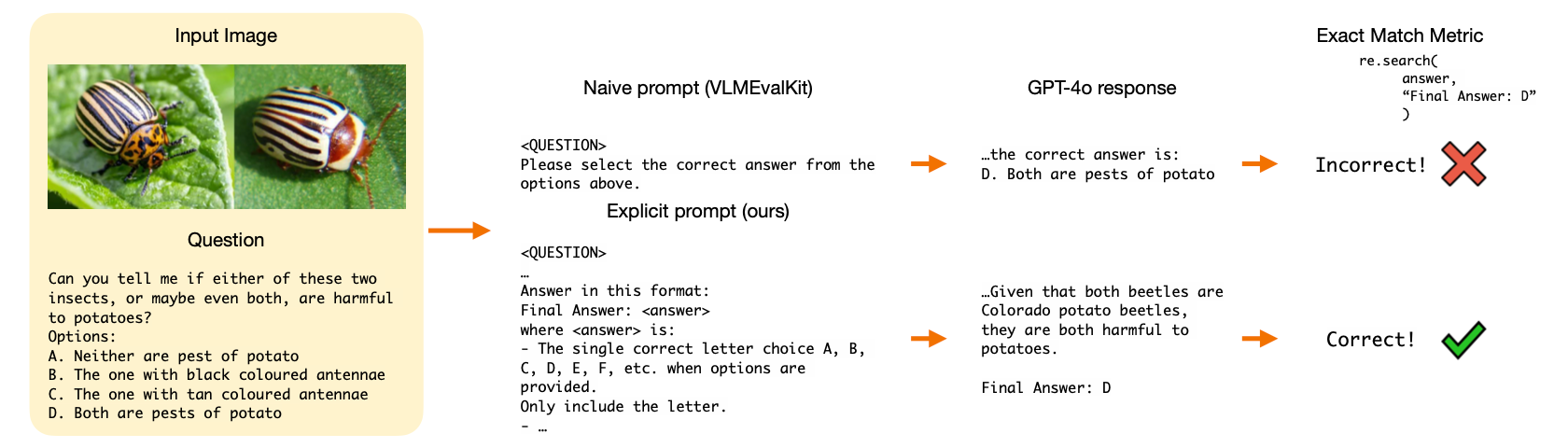
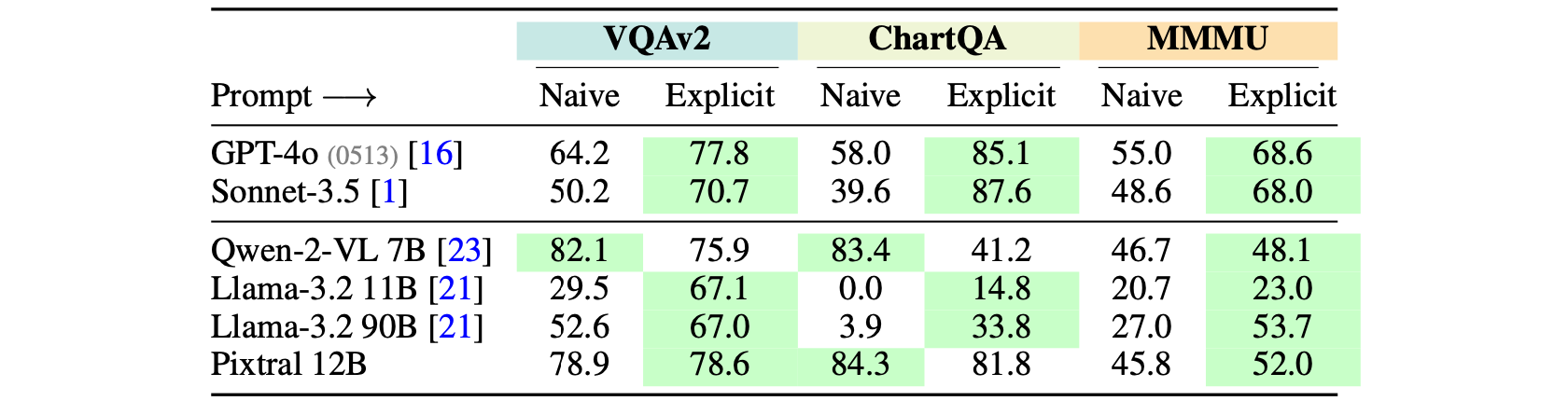
The paper finds that many benchmark prompts are under-specified. Explicit prompts that clarify the desired output format significantly improve performance for leading models, though smaller models sometimes degrade—likely due to training data mismatch. Pixtral 12B generally benefits from explicit prompts.
Sensitivity to evaluation metrics:
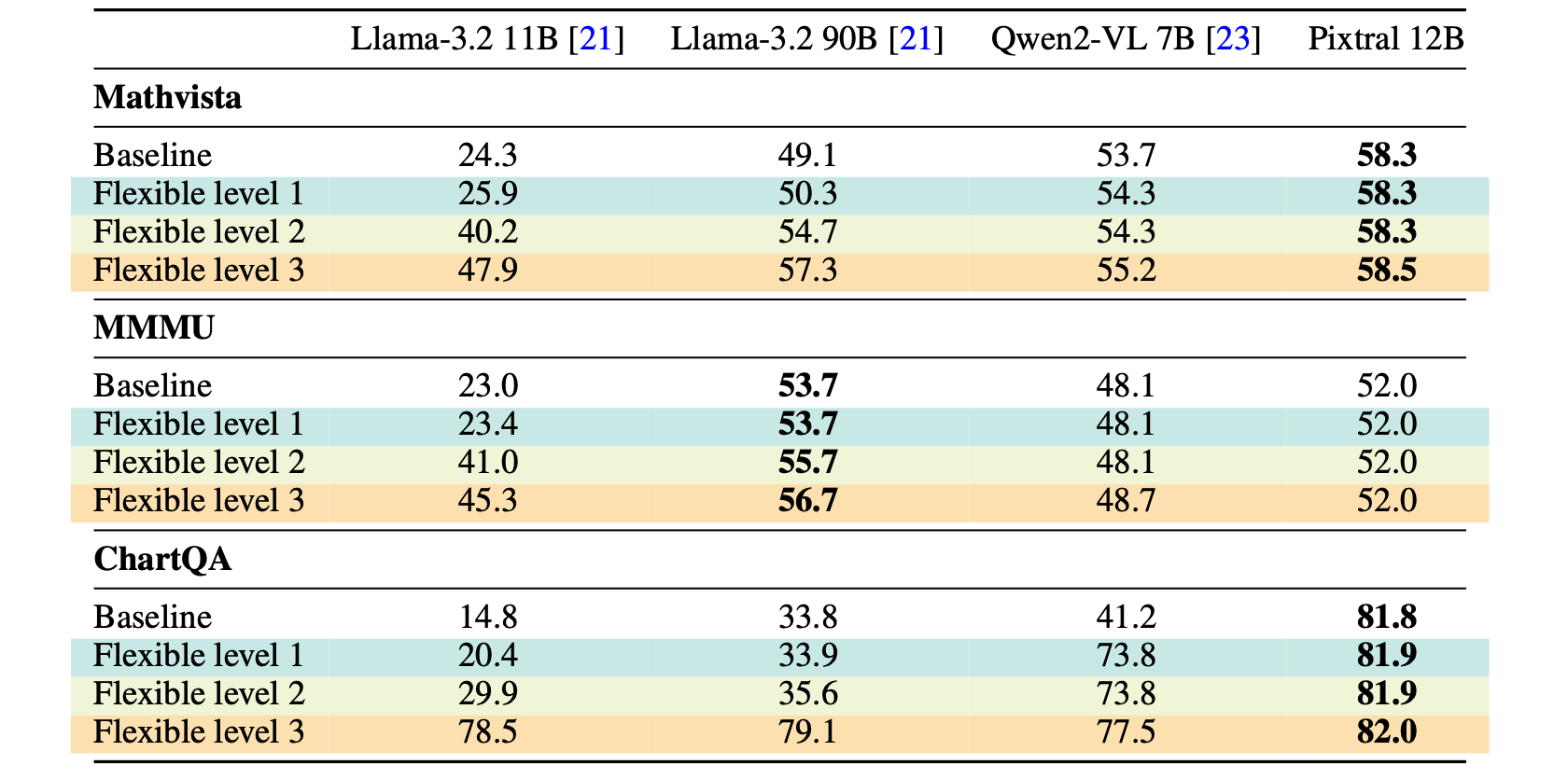
Using progressively looser parsing constraints reveals that some models’ low scores stem from format adherence issues rather than content errors. Pixtral 12B shows little improvement with flexible parsing, indicating strong instruction-following ability.
Pixtral Large:
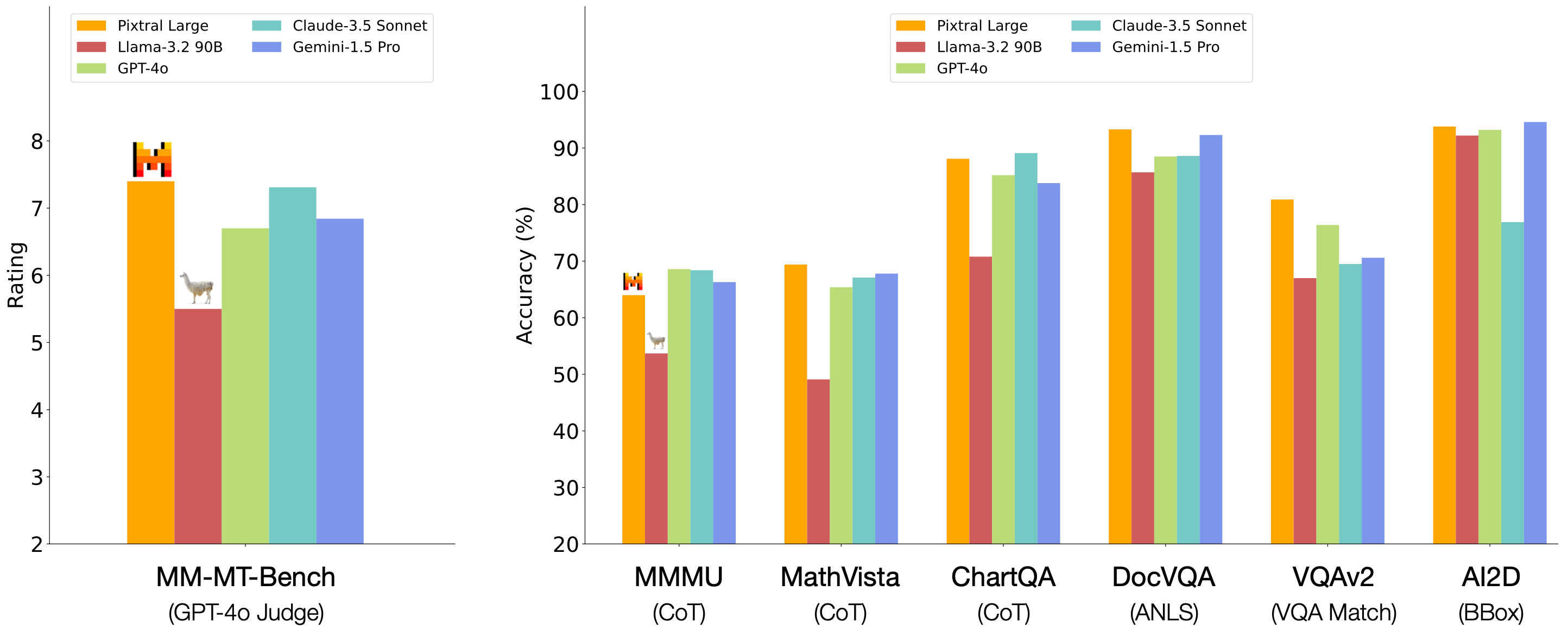
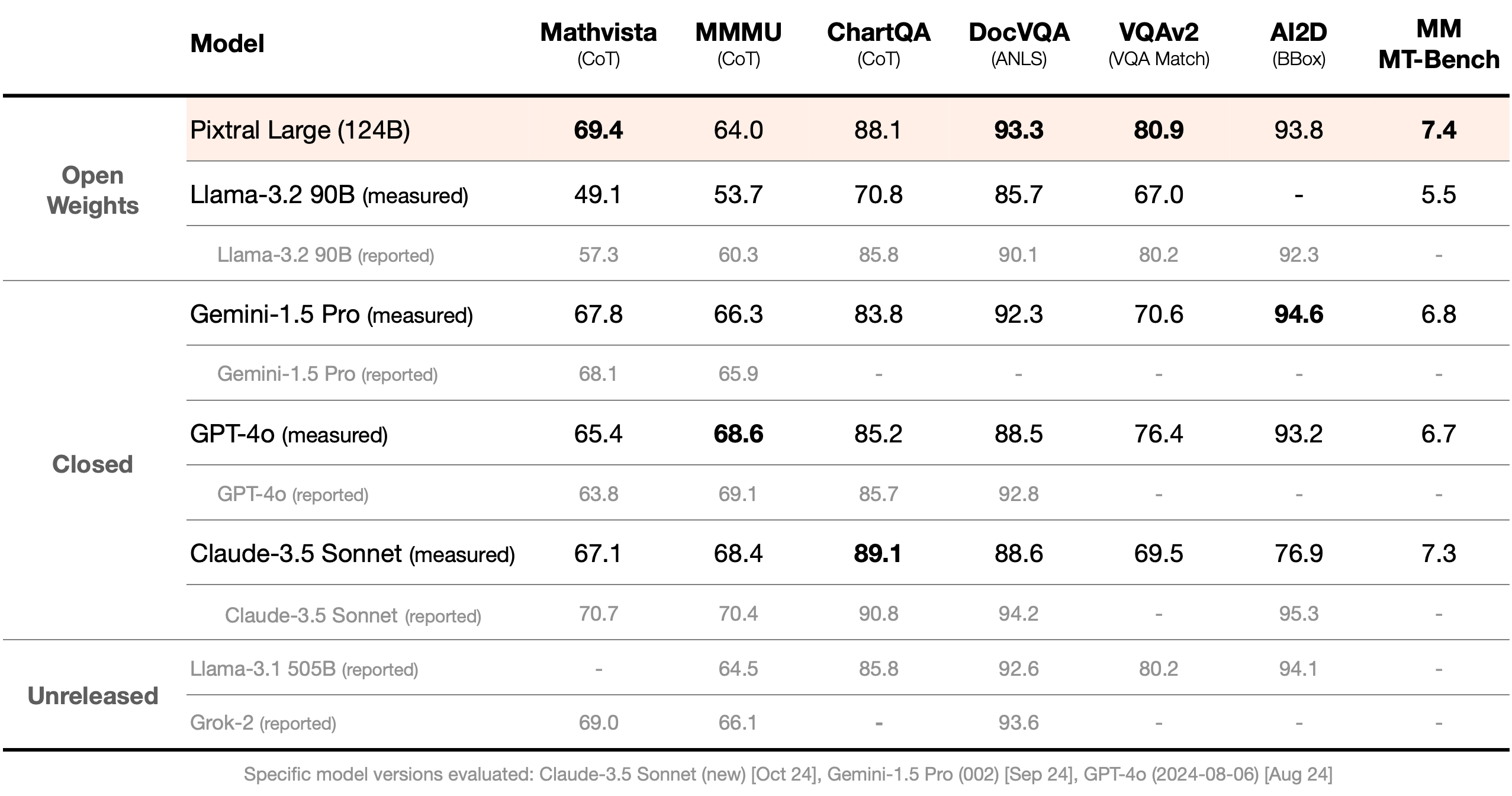
The 124B parameter variant achieves 69.4% on MathVista, surpassing all other models. On ChartQA and DocVQA, it outperforms GPT-4o and Gemini-1.5 Pro, and on MM-MT-Bench it beats Claude-3.5 Sonnet, Gemini-1.5 Pro, and GPT-4o.
Pixtral’s open-weight release democratizes access to frontier-level multimodal AI. Its natively multimodal architecture and careful attention to evaluation practices set a new standard for the field. The model’s strong instruction-following and flexible parsing robustness make it particularly attractive for production applications where reliability matters. By openly addressing evaluation inconsistencies, the paper also pushes the community toward more rigorous benchmarking. For AI practitioners, Pixtral offers a powerful, transparent, and customizable foundation for building multimodal systems.
Alex Krizhevsky, Ilya Sutskever et al.
Ashish Vaswani, Noam Shazeer et al.
Douglas M. Bates, Martin Mächler et al.
Diederik P. Kingma, Jimmy Ba